
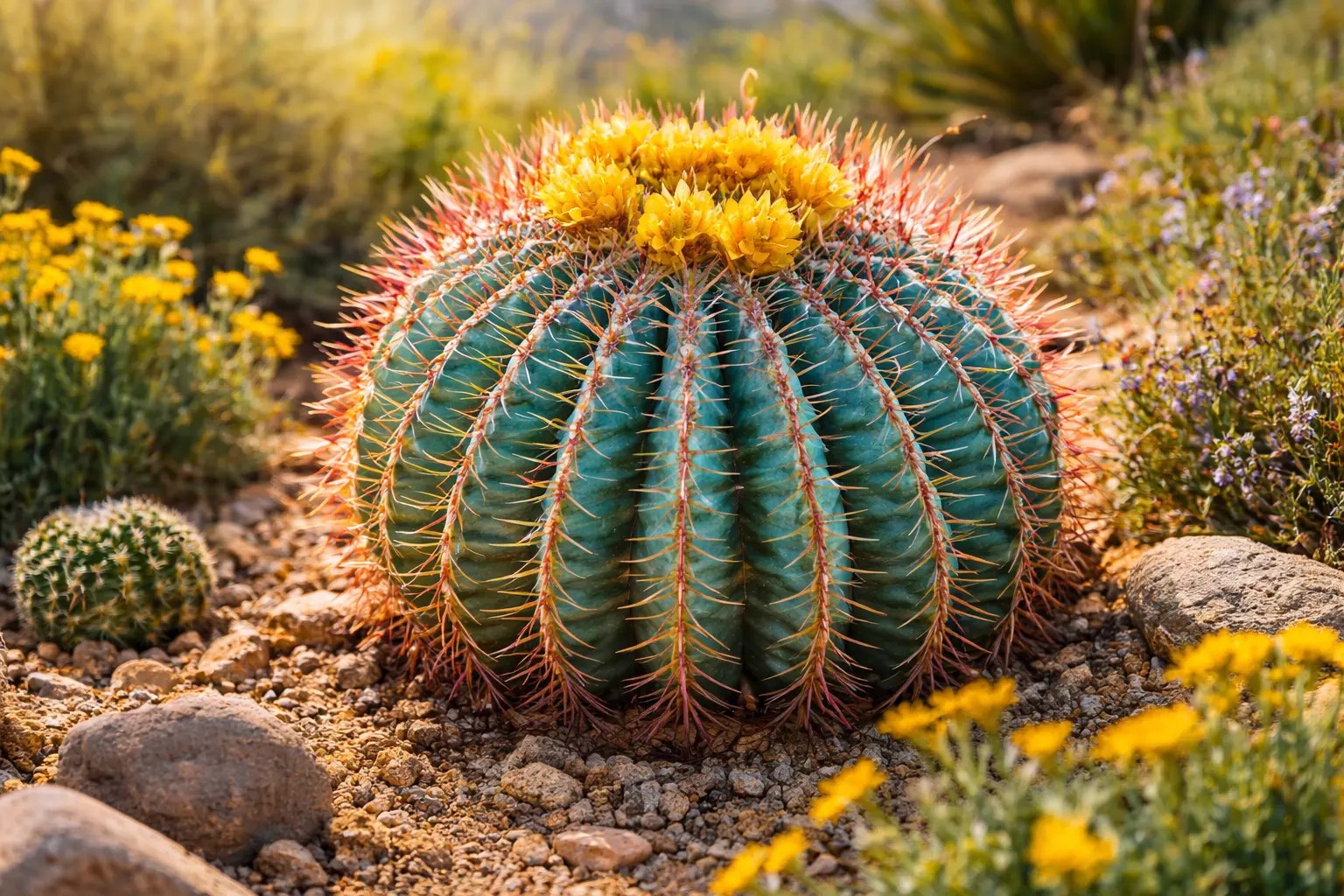
The Blue Barrel Cactus: A Guide to Growing and Caring for This Unique Succulent
The blue barrel cactus is a striking and attractive member of the cactus family, known for its distinctive round shape, bluish color, and pretty spring flowers. Whether you live in a desert climate or a colder, wetter region, growing and caring for a blue barrel cactus is relatively easy.
About Blue Barrel Cactus Plants
The scientific name for the blue barrel cactus is Ferocactus glaucescens. It is native to eastern and central Mexico, particularly the state of Hidalgo. These cacti typically grow in mountainous areas, often nestled among rocks or as part of the native juniper woodlands and shrub habitat.
Barrel cacti get their name from their characteristic shape and growth pattern, which is round and squat. They typically grow as solitary barrels, but as they mature, new heads may develop, creating a mound-like appearance. The color of the barrel cactus ranges from a rich gray-green to a bluish-green, and the surface is ridged with clusters of spines. The main barrel can grow up to 22 inches in height and 20 inches in diameter. In the spring, blue barrel cacti produce funnel-shaped, yellow flowers at the crown, followed by round, white fruits.
How to Grow a Blue Barrel Cactus
Growing a blue barrel cactus is a rewarding experience, and it is relatively easy to care for. Here are the key steps to ensure your cactus thrives:
Sunlight and Soil
Blue barrel cacti prefer full sun, so choose a planting location that receives at least six hours of direct sunlight per day. They require well-draining soil that is rich in organic matter. You can create your own potting mix by combining equal parts cactus potting mix, perlite, and compost.
Watering
Water your blue barrel cactus deeply but infrequently. Allow the soil to dry out completely between waterings. Overwatering can lead to root rot, so it is important to avoid getting the cactus too wet. During the winter months, you can reduce watering even further, as the cactus will go dormant.
Drainage
Good drainage is crucial for blue barrel cacti, as they are susceptible to root rot if they sit in waterlogged soil. When planting your cactus in a container, make sure to use a pot with drainage holes. You can also add a layer of gravel or pebbles to the bottom of the pot to improve drainage.
Feeding
Blue barrel cacti do not need to be fertilized frequently. You can fertilize them once a year during the growing season with a balanced cactus fertilizer.
Temperature
Blue barrel cacti are cold-hardy and can tolerate temperatures as low as 20 degrees Fahrenheit (-7 degrees Celsius). However, they should be protected from frost and freezing temperatures. If you live in a cold climate, it is best to grow your blue barrel cactus in a container so that you can bring it indoors during the winter months.
Common Problems
The most common problem with blue barrel cacti is root rot, which is caused by overwatering. Other potential problems include sunburn, pests, and diseases. Sunburn can occur if the cactus is exposed to too much direct sunlight, especially during the hottest part of the day. Pests such as mealybugs and scale insects can also infest blue barrel cacti, and diseases such as cactus rust and cactus blight can cause damage.
Conclusion
The blue barrel cactus is a beautiful and easy-to-care-for succulent that can add a touch of the desert to your home or garden. By following these growing and care tips, you can enjoy this unique plant for many years to come.
