
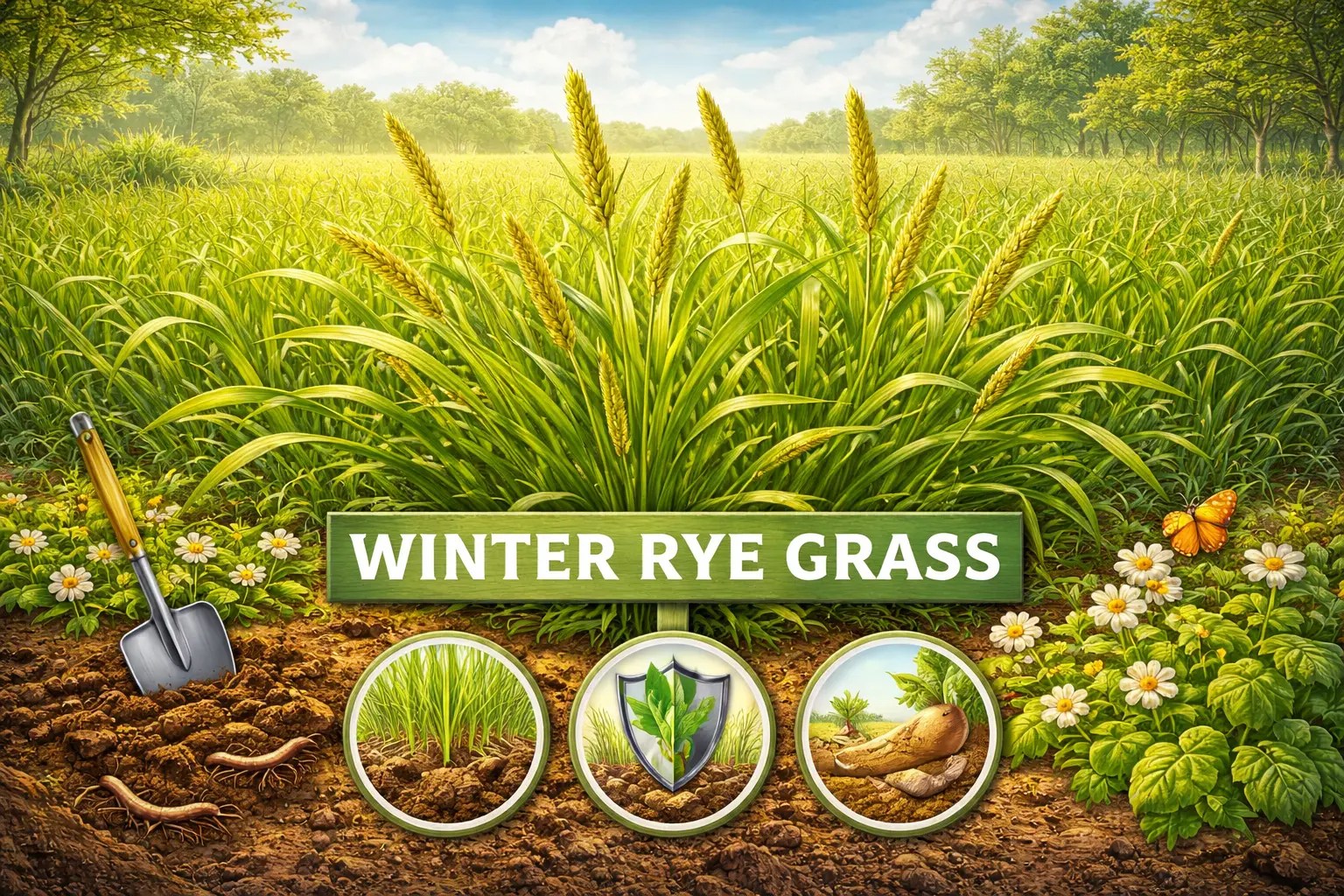
Winter Rye Grass: A Versatile Cover Crop for Healthy Soil
Introduction
Cover crops are like superheroes for your soil. They protect it from erosion, boost beneficial microbes, and improve its overall health. One of the best cover crops out there is winter rye grass. It’s hardy, easy to grow, and has a ton of benefits for your garden.
What is Winter Rye Grass?
Winter rye grass is the toughest of all the cereal grains when it comes to cold weather. It can handle temperatures as low as -30°F (-34°C) once it’s established. It can even sprout and grow in temps as low as 33°F (.5°C).
Don’t confuse winter rye grass with ryegrass. Ryegrass is used for lawns, pastures, and hay, while winter rye grass is a cover crop, forage crop, or grain that can be used to make flour, beer, whiskey, vodka, or eaten whole. It’s closely related to barley and wheat.
Benefits of Winter Rye Grass as a Cover Crop
Winter rye grass is an excellent choice for a cover crop because it’s:
- Inexpensive and readily available
- Easy to sow and grow
- Easy to till under
- Produces a lot of plant material in the spring
- Has deep roots that improve soil tilth
- Withstands drought better than other cereal grains
- Grows well in low-fertility soil
How to Grow Winter Rye Grass Cover Crops
Growing winter rye grass as a cover crop is a breeze. It thrives in well-draining loamy soil but can also tolerate heavy clay or sandy soil. The ideal pH for growing winter rye grass is 5.0 to 7.0, but it’s not too picky and will grow in a range of 4.5 to 8.0.
Sow winter rye cover crops in the late fall, around the time of the first light frost. Use a high seeding rate to ensure good groundcover for winter soil protection. Rake the garden smooth and broadcast 2 pounds (1 kg) of seed per 1,000 square feet (100 sq. m). Rake lightly to cover the seed and then water. Don’t sow rye more than 2 inches (5 cm) deep.
Rye rarely needs additional fertilizer because it can take up nitrogen from the soil left over from previous crops that were fertilized with nitrogen.
As winter ends and days get longer, rye’s growth slows down and it starts to flower. If you let it flower, it can be slow to decompose. It’s better to cut it back and till it into the soil when it’s between 6 and 12 inches (15-31 cm) tall.
Other Uses for Winter Rye Grass
In addition to being a great cover crop, winter rye grass can also be used for:
- Forage for livestock
- Grain for flour, beer, whiskey, and vodka
- Food for humans (boiled rye berries or rolled like oats)
Conclusion
Winter rye grass is a versatile and beneficial plant that can improve your soil health and provide a variety of other benefits. Whether you’re a seasoned gardener or just starting out, winter rye grass is a great choice for your garden.
