
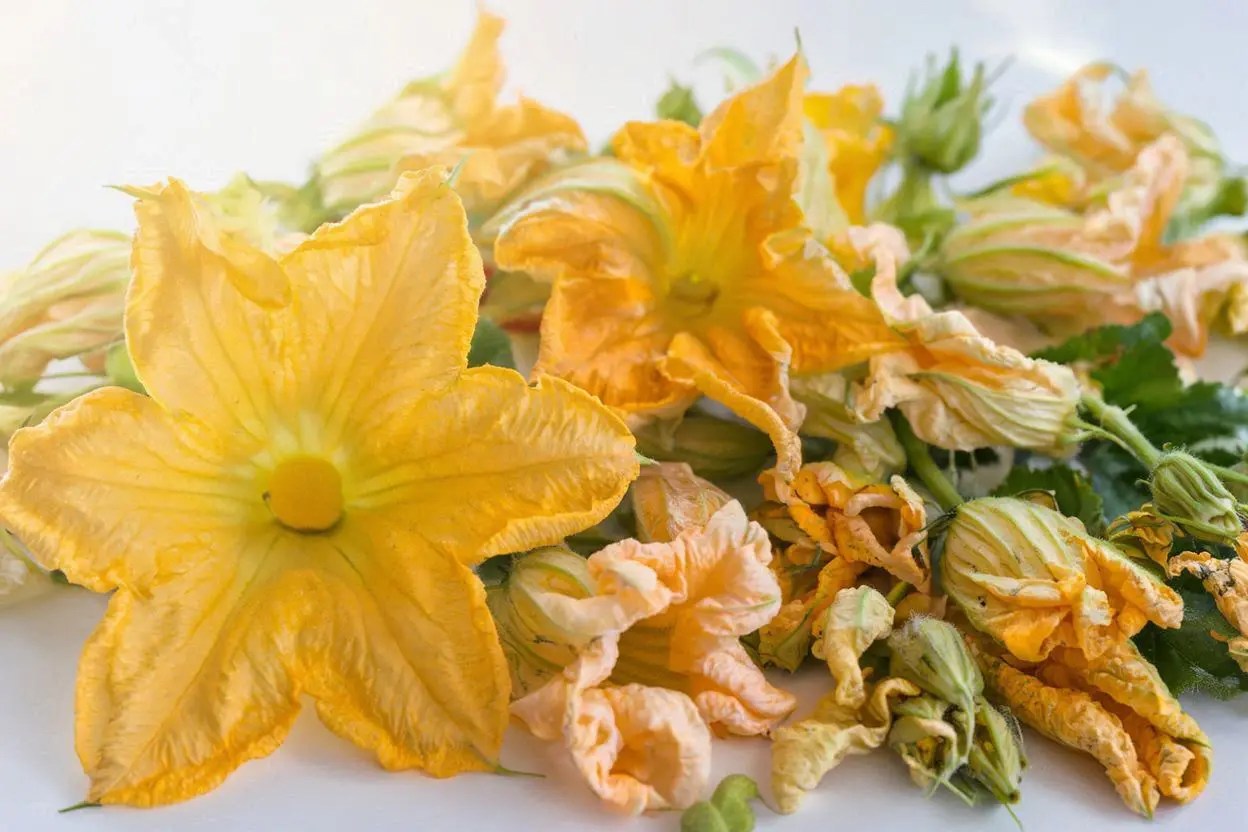
Squash Blossoms: A Culinary and Gardening Delight
What Are Squash Blossoms?
Squash blossoms are the beautiful, golden flowers that bloom on squash plants. Not only are they visually appealing, but they are also a delicious and nutritious food source. They have a delicate flavor that can be enjoyed in a variety of dishes.
Harvesting Squash Blossoms
To harvest squash blossoms, it is important to know the difference between male and female flowers. Male flowers grow first on the plant and have a thin base where they attach to the stem. Female flowers have a thick bulge, which is the ovary, where they grow from the plant.
The best time to harvest squash blossoms is in the morning when they are still in bud form. This will ensure that you get the freshest and most flavorful blossoms.
Storing Squash Blossoms
Squash blossoms are very delicate and do not store for long. However, there are a few tips you can follow to extend their freshness:
- Use them the day of harvest for the best flavor.
- Store them in the refrigerator for up to a week.
- Lay them out gently on tissue paper or a paper towel on a dish or flat container.
Using Squash Blossoms in Cooking
Squash blossoms can be used in a variety of dishes, both raw and cooked. Here are a few ideas:
- Garnish: Use squash blossoms as a colorful and flavorful garnish for salads, soups, and other dishes.
- Stuffing: Stuff squash blossoms with rice, herbs, or cheese for a unique and delicious appetizer or side dish.
- Pickling: Pickle squash blossoms for a tangy and flavorful treat.
- Deep frying: Deep fry squash blossoms for a crispy and savory snack.
- Canning: Can squash blossoms to preserve their flavor and enjoy them all year round.
Growing Squash Blossoms
If you want to grow your own squash blossoms, there are a few things you need to know. Squash plants are easy to grow and can be planted in the spring or summer. They prefer well-drained soil and full sun.
To encourage squash blossoms, water your plants regularly and fertilize them every few weeks. You can also pinch back the tips of the vines to promote branching and more blossom production.
Troubleshooting Common Problems
One common problem with squash blossoms is that they can be affected by pests and diseases. Aphids, squash bugs, and powdery mildew are all common problems.
To prevent pests and diseases, keep your plants healthy by watering them regularly and fertilizing them. You can also use insecticidal soap or neem oil to control pests.
Conclusion
Squash blossoms are a versatile and delicious ingredient that can be used in a variety of dishes. They are also a beautiful addition to any garden. By following the tips in this article, you can enjoy the beauty and flavor of squash blossoms all season long.
