
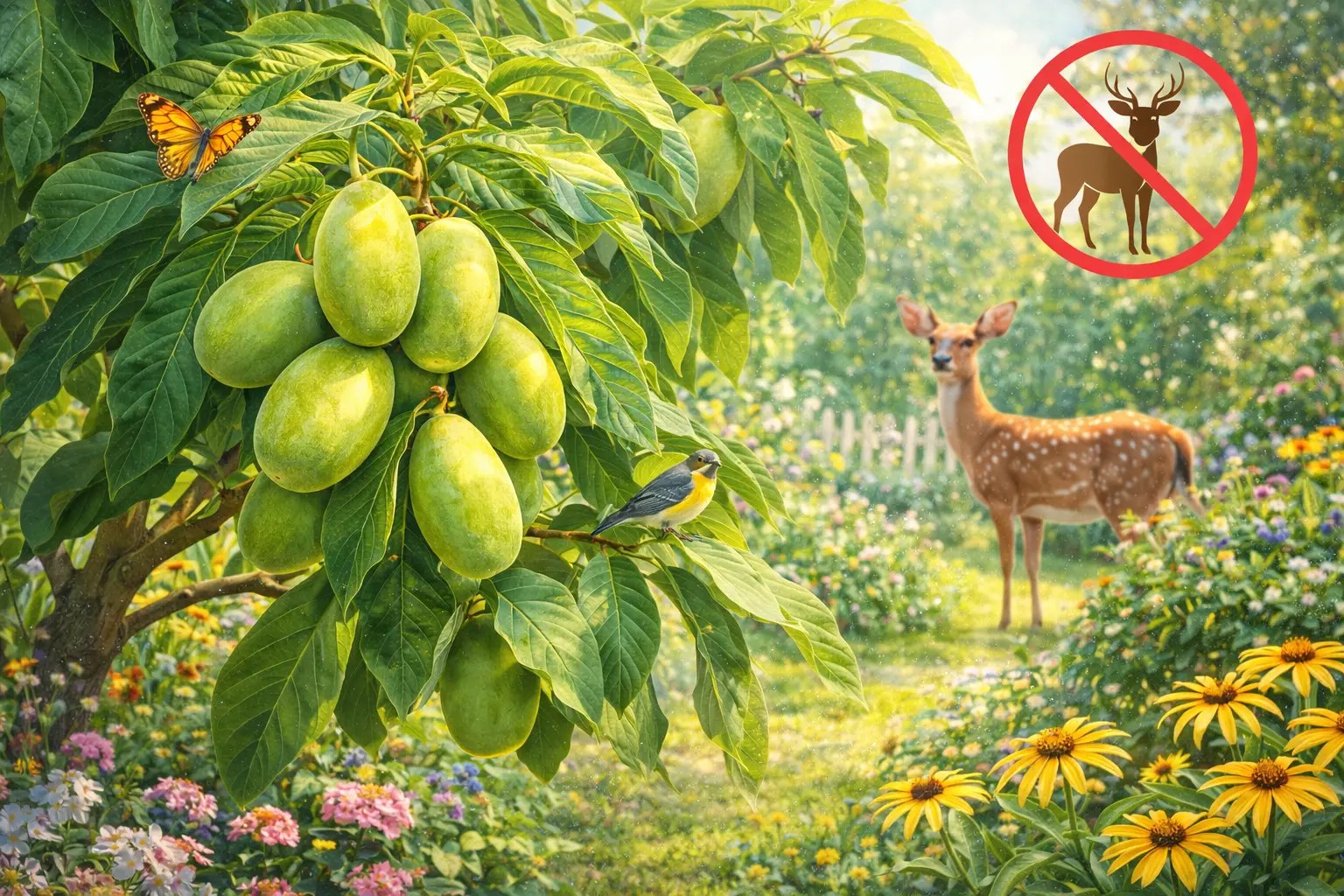
Pawpaw Trees: A Deer-Resistant Delight
Introduction
Planning a garden can be exciting, but it’s important to choose plants that can withstand the challenges of your environment. One common challenge is deer, which can munch on your precious plants and leave you disappointed. But fear not! Pawpaw trees are a deer-resistant option that can thrive in your garden.
Are Pawpaw Trees Deer Resistant?
Yes! Pawpaw trees are classified as “very resistant” to deer. This means that deer find pawpaws unpalatable due to the presence of acetogenins, a natural insect repellent found in the bark and leaves. As a result, you can enjoy peace of mind knowing that your pawpaw trees are safe from deer damage.
What Keeps Deer Out of Pawpaw Trees?
Acetogenins, found in the bark and leaves of pawpaw trees, give them an unpleasant taste that deters deer. Additionally, pawpaw leaves contain a compound called annonacin, which has insecticidal properties and further discourages deer from feeding on the tree.
Do Deer Eat Pawpaw Fruit?
While pawpaw fruit is generally considered unpalatable to deer due to its bitter taste, some sources suggest that deer may occasionally eat fallen fruit. It’s important to keep this in mind, especially during harvest time.
Protecting Pawpaw Trees from Deer
Even though pawpaw trees are deer resistant, it’s always a good idea to take additional precautions to protect your trees from potential rubbing damage caused by deer antlers. Here are some tips:
- Fencing: An 8-foot (2 m) woven wire fence is an effective barrier against deer.
- Tree Wraps: Wrap the trunks of young trees with tree wrap to prevent rubbing damage.
- Wire Box Fence: For seedlings, create a wire box fence around the plants to protect them from trampling or nibbling.
Benefits of Planting Pawpaw Trees
In addition to being deer resistant, pawpaw trees offer numerous benefits:
- Delicious Fruit: Pawpaw fruit is highly prized for its sweet, custard-like flavor.
- Nutritional Value: Pawpaws are a good source of vitamins A, C, and potassium.
- Medicinal Properties: Pawpaw leaves and bark have been used traditionally to treat various ailments.
- Wildlife Habitat: Pawpaw trees provide food and shelter for birds, squirrels, and other wildlife.
Conclusion
Pawpaw trees are a valuable addition to any garden, especially in areas with deer pressure. Their deer-resistant nature, coupled with their many benefits, makes them an excellent choice for gardeners looking for low-maintenance, wildlife-friendly plants. By following the tips outlined in this article, you can successfully grow and enjoy pawpaw trees in your garden.
