
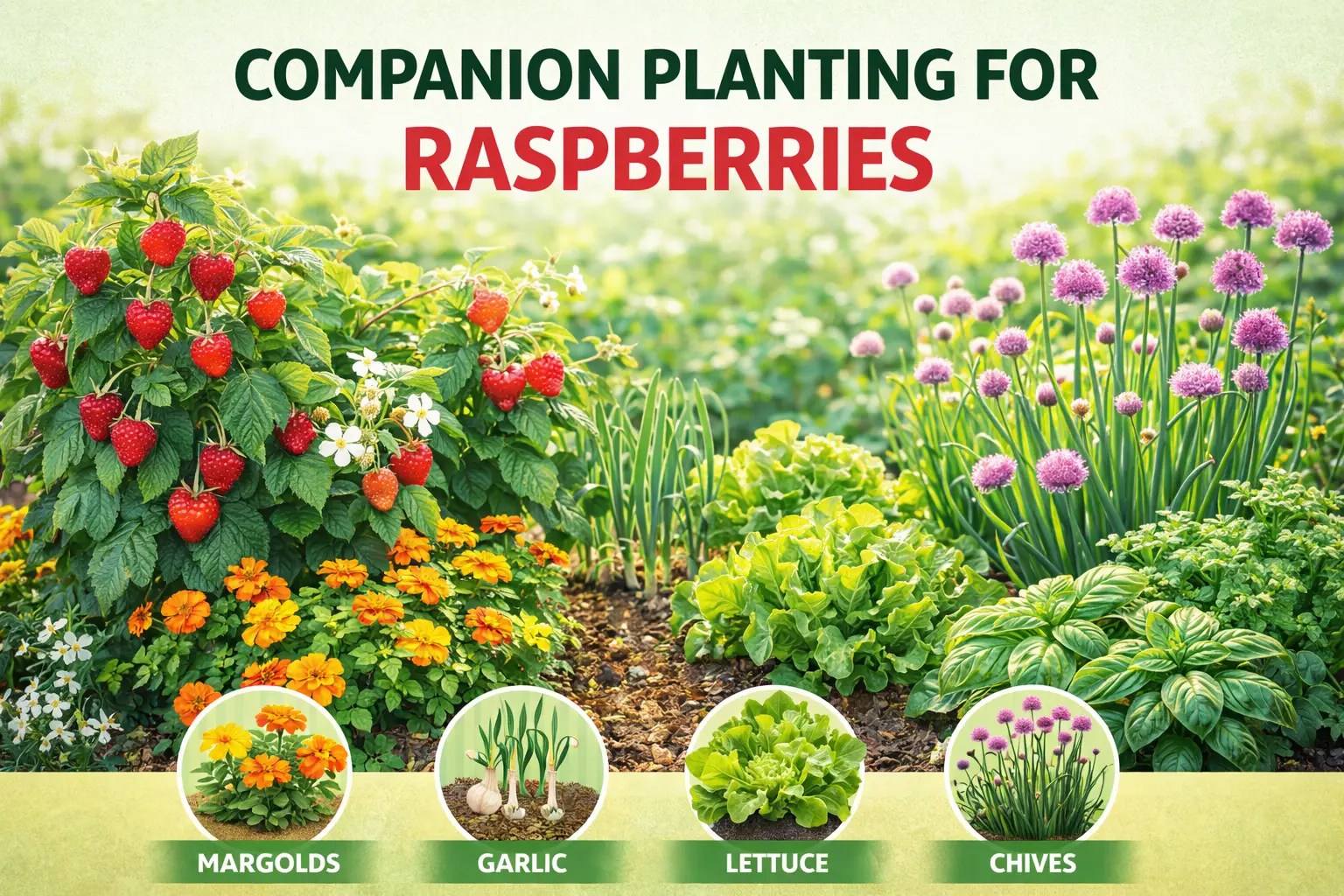
Raspberry Companion Planting: A Guide for Beginners
Raspberries are a delicious and nutritious fruit that can be easily grown in your own backyard. However, to get the best possible yield, it’s important to plant them with the right companion plants.
What are Companion Plants?
Companion plants are plants that benefit each other when grown together. They can help to improve soil health, prevent pests and diseases, and attract pollinators.
Benefits of Companion Planting for Raspberries
- Improved soil health: Companion plants can help to improve soil health by adding organic matter and nutrients to the soil. This can help raspberries to grow strong and healthy.
- Prevention of pests and diseases: Some companion plants can help to repel pests and diseases that can damage raspberries. For example, garlic and chives can help to repel aphids and spider mites.
- Attraction of pollinators: Companion plants that attract pollinators can help to increase the yield of raspberries. Bees and other pollinators are essential for raspberries to produce fruit.
Best Companion Plants for Raspberries
There are many different plants that can be used as companion plants for raspberries. Some of the best choices include:
- Soil health:
- Buckwheat
- Legumes
- Field brome
- Japanese millet
- Spring oats
- Sudan grass
- Annual ryegrass
- Winter rye
- Clover
- Hairy vetch
- Alfalfa
- Canola
- Marigolds
- Prevention of pests and diseases:
- Garlic
- Chives
- Nasturtiums
- Leeks
- Onions
- Chamomile
- Attraction of pollinators:
- Chervil and tansy (repels ants, Japanese beetles, cucumber beetles, squash bugs)
- Yarrow (repels harlequin beetles)
- Artemisia (repels insects, rabbits, and deer)
How to Plant Companion Plants with Raspberries
When planting companion plants with raspberries, it’s important to consider the following factors:
- Spacing: Plant companion plants at least 6 inches away from raspberry bushes. This will help to prevent competition for water and nutrients.
- Timing: Plant companion plants at the same time as raspberries. This will help to ensure that they get the same amount of sunlight and water.
- Maintenance: Companion plants should be watered and fertilized regularly. They should also be pruned to prevent them from becoming too large.
Conclusion
Companion planting is a great way to improve the health and productivity of your raspberry bushes. By choosing the right companion plants, you can help your raspberries to grow strong and healthy, and produce a bountiful harvest.
