
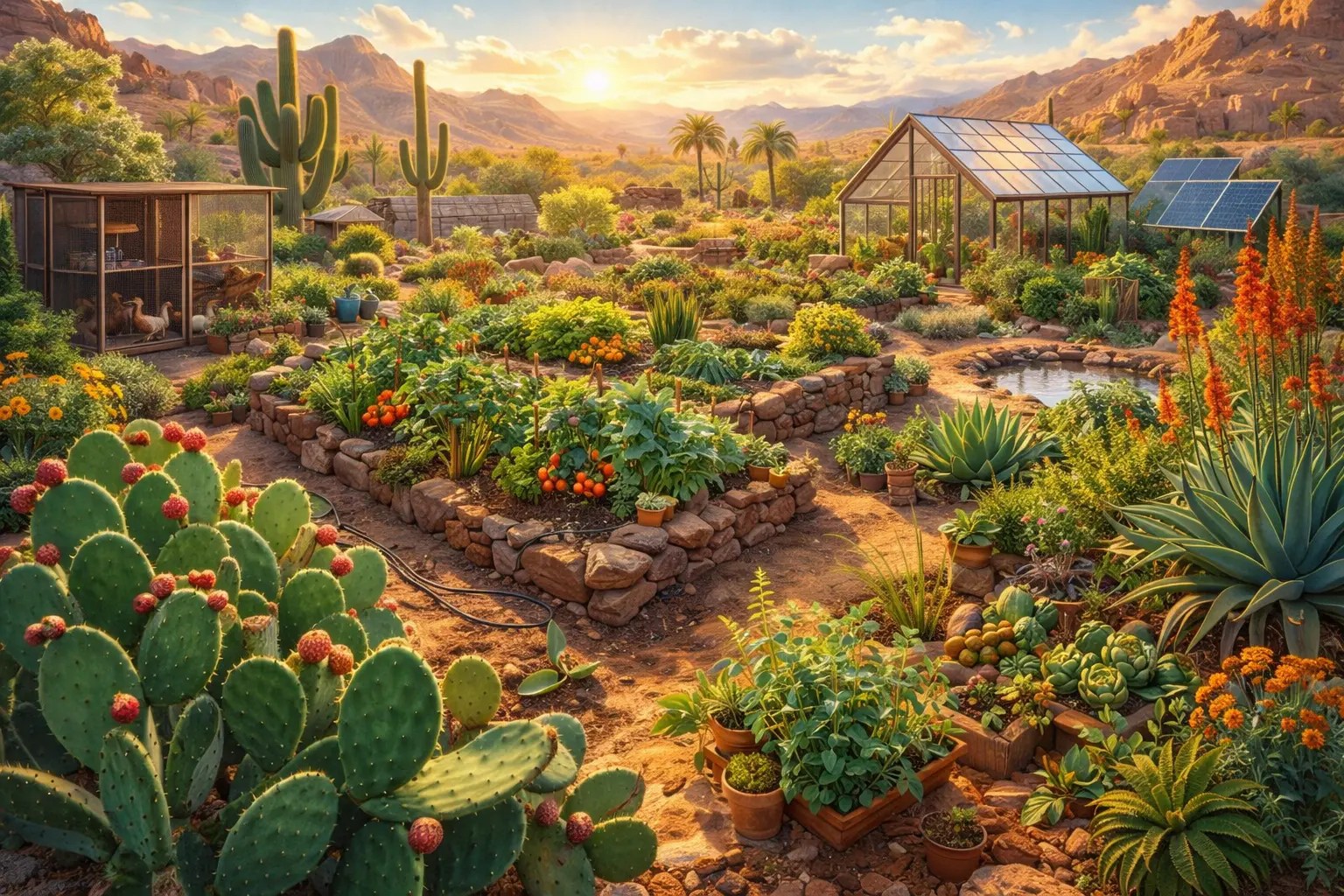
Desert Permaculture: A Guide to Gardening in Arid Environments
Introduction
The desert is a challenging environment for gardening, but it’s not impossible. With the right techniques, you can create a thriving and sustainable garden that provides food, shade, and beauty. Desert permaculture is a set of principles and practices that can help you achieve this goal.
What is Desert Permaculture?
Desert permaculture is a way of gardening that mimics the natural ecosystems of the desert. It focuses on using native plants and water-efficient techniques to create a self-sustaining garden. Desert permaculture gardens are designed to:
- Conserve water
- Protect crops from the sun and wind
- Enhance soil fertility
- Encourage biodiversity
Benefits of Desert Permaculture
There are many benefits to practicing desert permaculture, including:
- Increased food production: Desert permaculture gardens can produce a variety of food, including fruits, vegetables, and herbs.
- Water conservation: Desert permaculture techniques help to conserve water, which is essential in arid environments.
- Improved soil health: Desert permaculture practices help to improve soil fertility and structure.
- Reduced plant stress: Desert permaculture gardens provide protection from the sun and wind, which can reduce plant stress and improve yields.
- Encouragement of pollinators and wildlife: Desert permaculture gardens provide food and habitat for pollinators and other wildlife.
Key Principles of Desert Permaculture
There are several key principles that guide desert permaculture practices:
- Water conservation: Water is essential in the desert, so it’s important to use it wisely. Desert permaculture techniques such as swales, rain barrels, and drip irrigation can help to conserve water.
- Use of native plants: Native plants are adapted to the desert environment and require less water and care than non-native plants.
- Diversity: Planting a variety of plants helps to create a more resilient garden that can withstand the challenges of the desert.
- Observation: Paying attention to your garden and observing how plants grow and interact can help you to make informed decisions about how to manage it.
Getting Started with Desert Permaculture
If you’re interested in starting a desert permaculture garden, there are a few things you can do to get started:
- Choose a sunny location: Desert plants need plenty of sunlight to grow.
- Prepare the soil: The soil in the desert is often poor, so it’s important to amend it with compost or other organic matter.
- Select drought-tolerant plants: Choose plants that are adapted to the desert environment and require less water.
- Water wisely: Water your plants deeply and infrequently, and use mulch to help retain moisture.
- Be patient: It takes time to establish a desert permaculture garden. Be patient and don’t give up if you don’t see results immediately.
Conclusion
Desert permaculture is a sustainable and rewarding way to garden in arid environments. By following the principles of desert permaculture, you can create a thriving and beautiful garden that provides food, shade, and beauty for years to come.
