
How to Stop Erosion on a Slope or Hill
What Causes Erosion?
If you have a slope or hill on your property, you know that it can be a challenge to keep the soil from washing away. Erosion is a natural process that occurs when wind or water carries away soil. It can be a serious problem, as it can damage your property and pollute waterways.
How to Control Erosion
There are several things you can do to control erosion on your property, including:
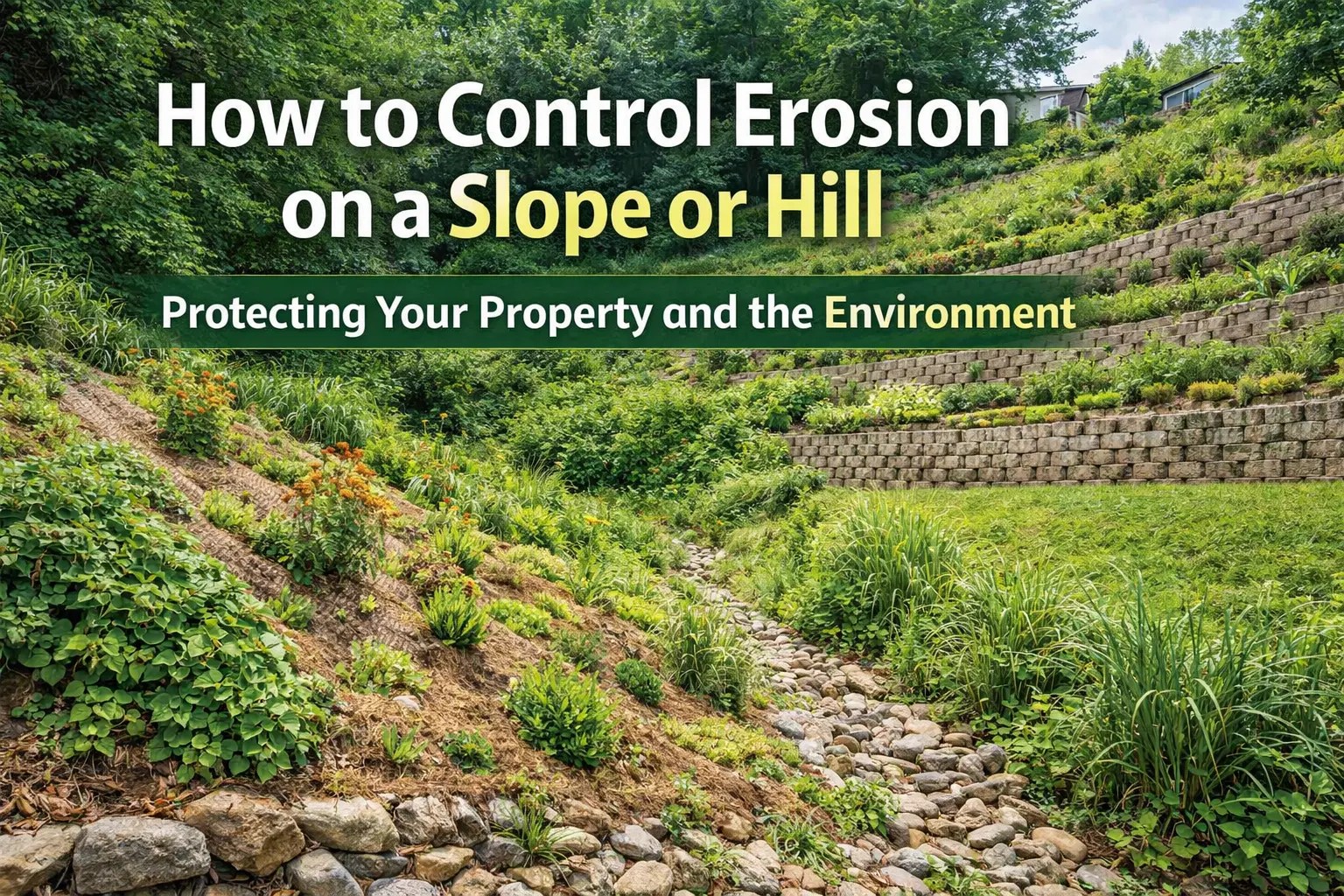
- Planting vegetation: Plants help to hold the soil in place with their roots. Groundcovers, perennials, shrubs, and trees are all good choices for erosion control.
- Installing retaining walls: Retaining walls are structures that are built to hold back soil. They can be made of concrete, stone, or wood.
- Terracing: Terracing is a technique that involves creating a series of level surfaces on a slope. This helps to slow down water flow and reduce erosion.
Choosing the Right Plants for Erosion Control
The best plants for erosion control are those that have dense root systems and can tolerate drought conditions. Some good choices include:
- Groundcovers: Prostrate juniper, pachysandra, Japanese spurge, bugleweed, liriope, mondo grass, daylilies, Japanese plum yew, evergreen candytuft, and phlox are all good groundcovers for erosion control.
- Perennials: Perennials are plants that come back year after year. Some good perennials for erosion control include black-eyed Susans, coneflowers, yarrow, and sedum.
- Shrubs: Shrubs are woody plants that are smaller than trees. Some good shrubs for erosion control include viburnum, dogwood, and elderberry.
- Trees: Trees are the largest type of plant. They can provide excellent erosion control, but they can also be expensive to plant and maintain. Some good trees for erosion control include oak, maple, and pine.
Installing a Retaining Wall
Retaining walls are a good option for controlling erosion on steep slopes. They can be made of concrete, stone, or wood. Concrete retaining walls are the most durable, but they are also the most expensive. Stone retaining walls are a good compromise between cost and durability. Wood retaining walls are the least expensive, but they are also the least durable.
When installing a retaining wall, it is important to dig a trench that is at least 12 inches deep and 18 inches wide. The wall should be built on a level surface, and the stones or blocks should be mortared together.
Building a Terrace
Terracing is a technique that involves creating a series of level surfaces on a slope. This helps to slow down water flow and reduce erosion. To build a terrace, you will need to:
- Mark out the area where you want to build the terrace.
- Dig a trench that is at least 12 inches deep and 18 inches wide.
- Fill the trench with gravel or crushed rock.
- Compact the gravel or crushed rock.
- Build a retaining wall around the perimeter of the terrace.
- Fill the terrace with soil and plant vegetation.
Other Ways to Control Erosion
In addition to the methods described above, there are a number of other things you can do to control erosion on your property, including:
- Using erosion blankets: Erosion blankets are made of a biodegradable material that helps to hold the soil in place. They are a good option for newly seeded areas or areas that are prone to erosion.
- Installing large rocks or tree trunks: Large rocks or tree trunks can be used to deflect water away from areas that are prone to erosion.
- Creating a dry creek bed: A dry creek bed is a shallow trench that is filled with rocks. It helps to slow down water flow and reduce erosion.
- Installing a French drain: A French drain is a subsurface drainage system that helps to remove excess water from an area.
Conclusion
Erosion is a serious problem that can damage your property and pollute waterways. However, there are a number of things you can do to control erosion, including planting vegetation, installing retaining walls, and terracing. By taking the proper steps, you can protect your property and the environment.
