
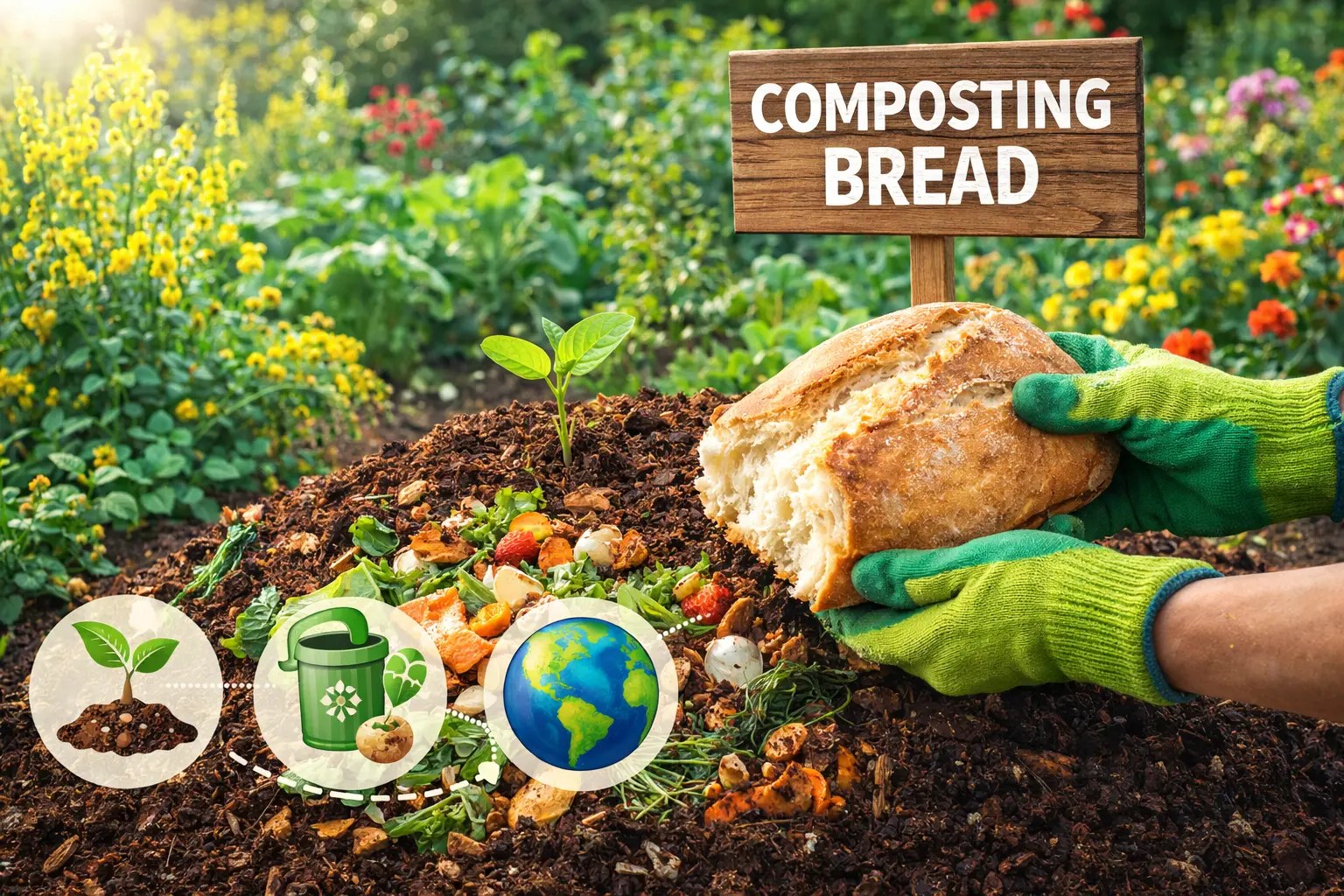
Compost: A Gardener’s Gold
What is Compost?
Compost is a magical mixture of decomposed organic materials, like food scraps and plant trimmings. It’s like a superfood for your soil, making it healthier and more productive.
Why Compost?
Compost is a treasure for gardeners because:
- It improves soil structure, making it fluffy and easy for plants to grow.
- It adds nutrients to the soil, giving your plants the vitamins and minerals they need to thrive.
- It helps retain moisture in the soil, reducing the need for watering.
- It attracts beneficial organisms, like worms and microorganisms, that help improve soil health.
Can You Compost Bread?
“Can I compost bread?” is a question that puzzles many compost enthusiasts. The answer is yes, but there are a few things to keep in mind.
- Yes, you can compost bread. It’s a great way to recycle stale bread and add nitrogen to your compost pile.
- Bread attracts pests. To avoid unwanted visitors, break bread into small pieces and mix it with other compost materials.
- Fresh bread can be moldy. If you’re adding fresh bread to your compost, make sure it’s mold-free. Mold can introduce harmful bacteria to your compost.
- Closed compost containers are best. These containers keep out pests and rodents, ensuring a cleaner and less smelly compost pile.
Composting Bread: A Step-by-Step Guide
Composting bread is easy peasy! Here’s how to do it:
- Break bread into small pieces. This helps the bread decompose faster.
- Mix the bread pieces with other compost materials. You can add vegetable scraps, leaves, or grass clippings.
- Add the mixture to the center of your compost pile. This helps keep rodents away.
- Cover the mixture completely. This prevents pests from getting in and keeps the compost pile from smelling.
Green or Brown?
Compost materials are categorized as either green or brown. Green materials are high in nitrogen, while brown materials are high in carbon. Bread is considered a green material due to its high nitrogen content. Compost piles should have a balance of both green and brown materials, roughly one-third green to two-thirds brown.
Benefits of Composting Bread
Composting bread has several benefits:
- Reduces waste. Bread is a common food waste, but composting it keeps it out of landfills.
- Enriches soil. Composted bread adds valuable nutrients to the soil, benefiting plants and the environment.
- Attracts pollinators. Composting bread can attract pollinators, such as bees and butterflies, which are essential for plant reproduction.
- Reduces greenhouse gases. When food waste decomposes in landfills, it releases methane, a greenhouse gas that contributes to climate change. Composting food waste, including bread, helps reduce methane emissions.
Conclusion
Composting bread is a simple and effective way to improve your soil, reduce waste, and help the environment. By following these tips, you can turn stale bread into a valuable resource for your garden.
