
0
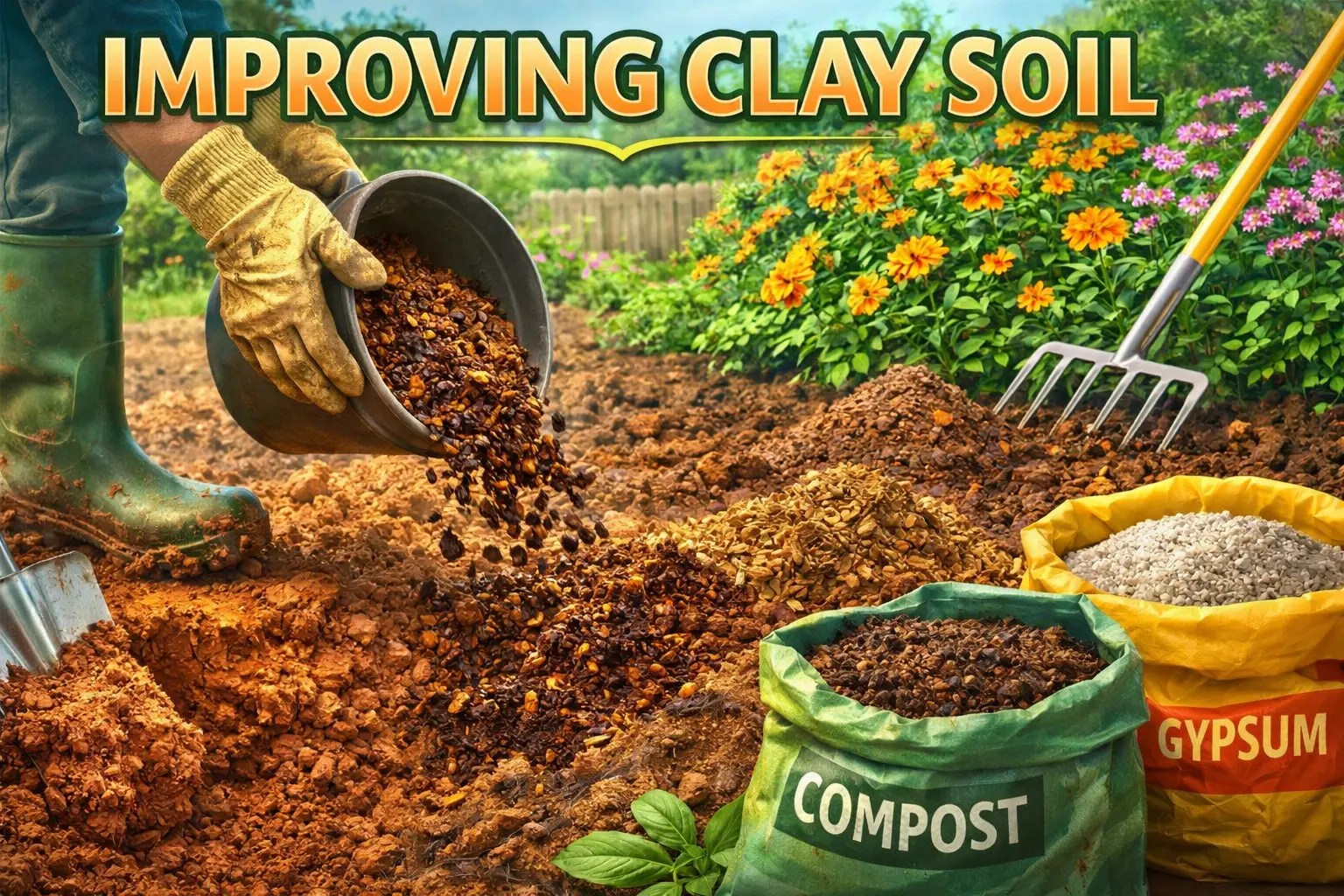
Improving Clay Soil: A Comprehensive Guide for Young Gardeners
Clay soil can be a challenge for gardeners, but it doesn’t have to ruin your gardening experience. With a little know-how and some patience, you can transform your clay soil into a rich and fertile growing medium.
Understanding Clay Soil
Clay soil is made up of tiny particles that pack together tightly, creating a dense and impermeable structure. This can lead to poor drainage, compaction, and difficulty for plant roots to penetrate.
Steps to Improve Clay Soil
1. Avoid Compaction
- Never work clay soil when it’s wet, as this will compact it even more.
- Avoid walking on the soil as much as possible.
- Use raised beds to keep weight off the soil.
2. Add Organic Material
- Organic materials, such as compost, manure, and leaf mold, help to break up clay soil and improve drainage.
- Add 3-4 inches of organic material to the soil and work it in gently.
3. Cover with Organic Material
- Mulch clay soil with organic materials like bark, sawdust, or wood chips.
- As these materials break down, they will improve the soil structure.
4. Grow a Cover Crop
- Cover crops, such as clover, timothy hay, or hairy vetch, can help to aerate the soil and add organic matter.
- Plant cover crops during the off-season.
Additional Tips for Amending Clay Soil
- Amending clay soil takes time and effort, but the results are worth it.
- Raised beds can be a quick solution for improving clay soil.
- Don’t give up if you don’t see results immediately.
Benefits of Improving Clay Soil
- Improved drainage
- Reduced compaction
- Increased soil fertility
- Better root development
- Healthier plants
Long-Term Solutions for Clay Soil
- Regularly adding organic matter to the soil
- Using raised beds
- Avoiding over-tilling
- Planting cover crops
Best Plants for Clay Soil
- Trees: oak, maple, birch
- Shrubs: azaleas, rhododendrons, hydrangeas
- Flowers: daylilies, irises, hostas
- Vegetables: tomatoes, peppers, cucumbers
Conclusion
Improving clay soil is not a quick fix, but it is a worthwhile investment for any gardener. By following these steps and using the right techniques, you can transform your clay soil into a thriving and productive growing environment.
