
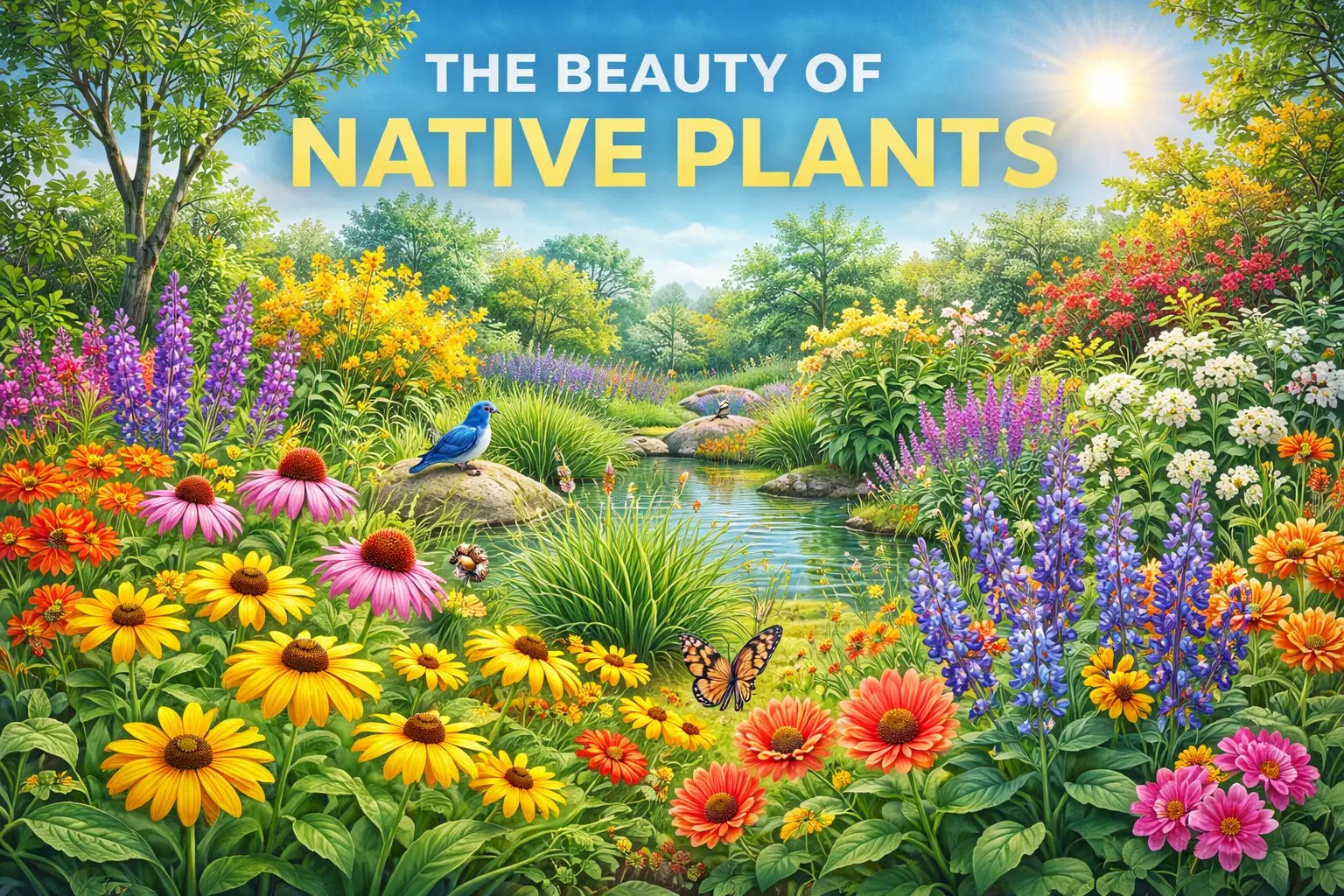
Native Plants: The Key to a Thriving Garden and a Healthy Ecosystem
What are Native Plants?
Native plants are those that naturally grow in a particular area. They have evolved over thousands of years to thrive in the local climate and soil conditions, and they play a vital role in the ecosystem.
Why Plant Native Species?
There are many benefits to planting native species in your garden:
- They support and stabilize the natural environment: Native plants provide food and habitat for local wildlife, including birds, bees, butterflies, and other pollinators. They also help to control erosion and improve water quality.
- They require less water and maintenance: Native plants are adapted to the local climate, so they generally require less watering and fertilizer than non-native plants. They are also more resistant to pests and diseases.
- They are particularly well-suited to their area and are better able to survive and thrive: Native plants have evolved to tolerate the local climate and soil conditions, so they are more likely to survive and thrive in your garden than non-native plants.
Native Plants of the Upper Midwest
The Upper Midwest region, which includes the states of Michigan, Minnesota, Wisconsin, and Iowa, is home to a wide variety of beautiful and beneficial native plants. Here are just a few examples:
Michigan Native Plants
- Black-eyed Susan: A popular perennial with cheerful, late summer and fall blooms.
- Canada anemone: A small white flower for areas with moist soil.
- Butterfly weed: A bright orange beauty for full sun and drier soils.
- New England aster: A daisy-like flower with bright blue fall color.
- Swamp milkweed: Supports endangered monarch butterflies with its flowers.
Minnesota Native Plants
- Autumn onion: A native onion that produces pretty spheres of pink lavender flowers and has edible bulbs.
- Wild columbine: A beautiful native woodland flower with striking red and yellow blooms.
- Cardinal flower: Choose this flower for bright red color.
- Wood lily: Produces large, red-orange flowers.
- Dwarf false indigo: A shrub with delicate, feathered leaves and purple flowers.
Wisconsin Native Plants
- Pale purple coneflower: A perennial that attracts butterflies and birds.
- Prairie blazing star: A perennial that blooms with striking pink and magenta flowers.
- Showy goldenrod: Provides gorgeous fall color.
- Prairie smoke: A unique plant named for its wispy, smoke-like seedhead.
- American elderberry: Produces pretty, scented flowers and edible dark berries.
How to Choose Native Plants for Your Garden
When choosing native plants for your garden, it is important to select species that are well-suited to your local climate and soil conditions. You can consult with a local nursery or extension service to get recommendations for plants that will thrive in your area.
It is also important to consider the size and shape of your garden when choosing native plants. Some plants, such as trees and shrubs, can grow quite large, while others, such as wildflowers and groundcovers, are more compact. Make sure to choose plants that will fit well in your space and provide the benefits you are looking for.
Conclusion
Planting native species is a great way to create a beautiful and sustainable garden that supports the local ecosystem. By choosing plants that are well-suited to your area, you can reduce your water and maintenance needs while creating a haven for wildlife.
