
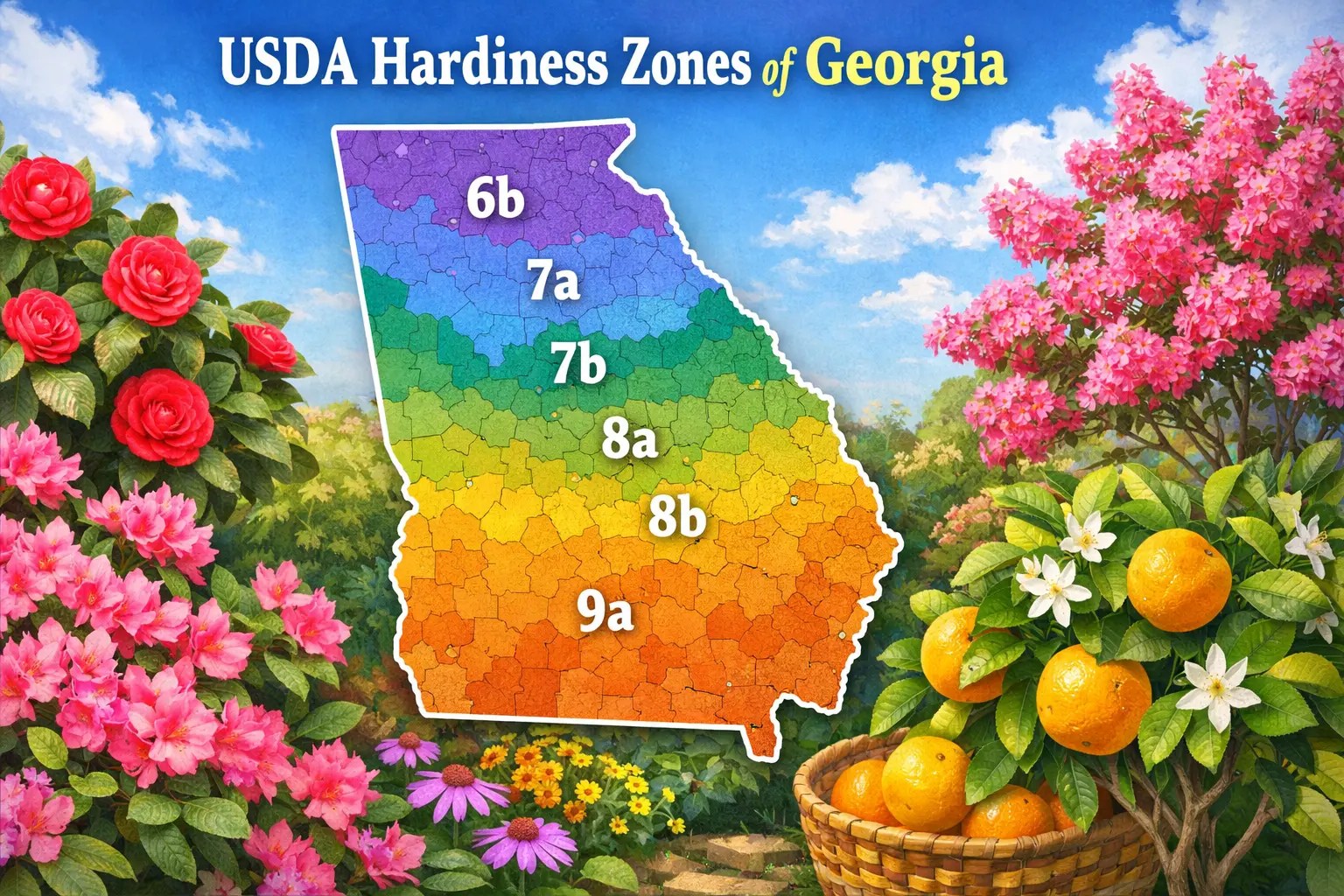
USDA Hardiness Zone Map for Georgia
The USDA Hardiness Zone Map is a tool that helps gardeners determine which plants are likely to survive the winter in their area. The map is divided into 13 zones, with each zone representing a different range of average annual minimum temperatures.
Georgia is located in USDA Hardiness Zones 6 through 9. This means that the average annual minimum temperature in Georgia ranges from -10 degrees Fahrenheit in the northernmost part of the state to 40 degrees Fahrenheit in the southernmost part of the state.
How to Use the USDA Hardiness Zone Map
To use the USDA Hardiness Zone Map, simply find your location on the map and note the color of the zone that you are in. The legend on the map will tell you the average annual minimum temperature for that zone.
Once you know your USDA Hardiness Zone, you can use it to choose plants that are likely to survive the winter in your area. You can find the USDA Hardiness Zone for any plant by looking at the plant tag or by searching for the plant online.
What Plants are Appropriate for My Planting Zone in Georgia?
Many different plants are appropriate for planting in Georgia, depending on the specific USDA Hardiness Zone. Some popular choices include:
- Zone 6: azaleas, camellias, dogwoods, hydrangeas, and roses
- Zone 7: crape myrtles, gardenias, hibiscus, and lantanas
- Zone 8: bougainvillea, citrus trees, palms, and tropical hibiscus
- Zone 9: avocados, bananas, mangoes, and papayas
Where Can I Buy Plants that are Marked with the Correct USDA Plant Hardiness Zone for Georgia?
You can buy plants that are marked with the correct USDA Plant Hardiness Zone for Georgia at most nurseries and garden centers. When you are buying plants, be sure to check the plant tag to make sure that the plant is appropriate for your planting zone.
How to Provide Extra Shelter for Plants in Georgia During the Winter
If you want to grow plants that are not appropriate for your planting zone, you will need to provide extra shelter for them during the winter. This can be done by:
- Mulching around the plants to insulate their roots
- Covering the plants with a blanket or tarp
- Moving the plants to a protected location, such as a greenhouse or garage
What are the Climate Trends in Georgia that are Affecting the USDA Plant Hardiness Zones?
The climate in Georgia is changing, and this is affecting the USDA Plant Hardiness Zones. The average annual temperature in Georgia has increased by about 2 degrees Fahrenheit over the past 30 years. This means that some plants that were once only able to survive in the southernmost part of the state can now be grown in the northern part of the state.
It is important to stay up-to-date on the latest climate trends in Georgia so that you can make informed decisions about which plants to grow in your garden. You can find more information about the climate in Georgia on the website of the National Oceanic and Atmospheric Administration (NOAA).
Conclusion
The USDA Hardiness Zone Map is a valuable tool that can help you choose the right plants for your garden. By understanding your planting zone and the climate trends in your area, you can create a beautiful and thriving garden that will bring you joy for years to come.
