
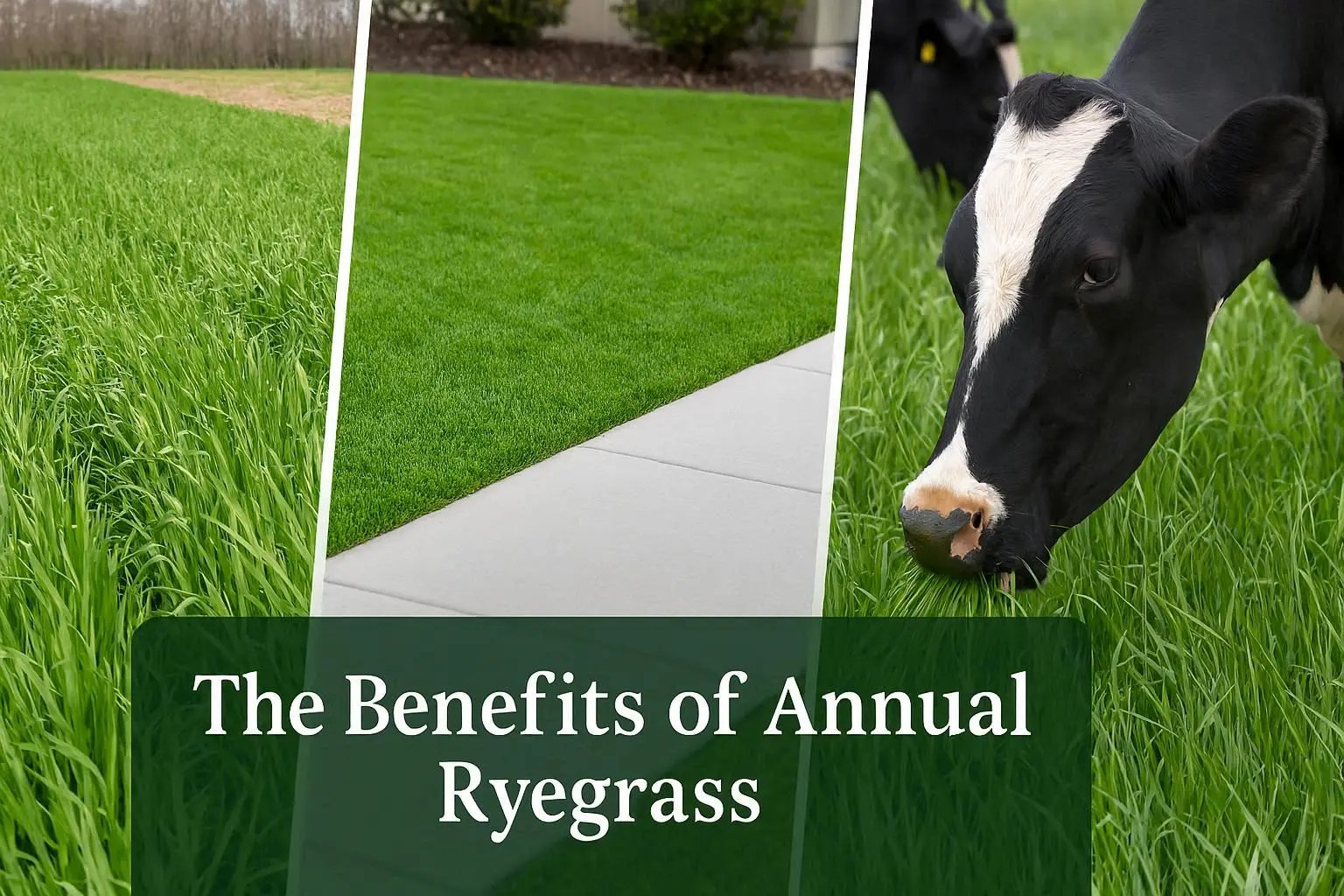
Annual Ryegrass: A Versatile Cover Crop, Turf, and Forage
Introduction
Annual ryegrass, also known as Italian ryegrass, is a valuable plant with a wide range of uses. It is commonly used as a cover crop to improve soil health and prevent erosion. It can also be used as a turf grass, forage for livestock, and even as an ornamental plant.
Botanical Information
Scientific Name: Lolium multiflorum Height: 3 feet Spread: Spreading Sun Exposure: Sun to part sun Soil Requirements: Any, well-draining Hardiness Zones: 5-9 When to Plant: Early spring or fall
Uses of Annual Ryegrass
Cover Crop:
Annual ryegrass is an excellent cover crop because it:
- Prevents erosion
- Improves soil drainage
- Reduces soil compaction
- Provides nutrients for subsequent crops
- Suppresses weeds
- Enhances soil biodiversity
Turf Grass:
Annual ryegrass is a popular choice for turf grass in cool-season climates. It is:
- Shade tolerant
- Cold tolerant
- Quick to germinate and establish
- Low-maintenance
- Can be used to overseed warm-season grasses during winter
Forage:
Annual ryegrass is a nutritious forage for livestock, providing:
- High protein content (12-25%)
- Palatable to deer, cattle, and sheep
- Can be used as hay or silage
Planting and Care
Planting:
- Plant in early spring or fall.
- Sow seeds at a rate of 20 pounds per acre.
- Water regularly until germination occurs.
Care:
- Fertilize with a high nitrogen fertilizer in spring.
- Mow regularly to remove seed heads and maintain a desirable appearance.
- Water deeply but infrequently to promote deep root growth.
Pests and Diseases
Annual ryegrass is relatively pest-resistant, but it can be susceptible to:
- Chinch bugs
- Grubs
- Beetles
- Rust
Invasive Potential
While annual ryegrass is not typically invasive, it can become weedy in temperate climates due to its prolific seed production. It can hybridize with perennial ryegrass, creating a more aggressive strain. However, it usually dies out when temperatures reach 80°F (27°C).
Long-Tail Keywords:
- Annual ryegrass cover crop benefits
- How to use ryegrass as a cover crop
- Ryegrass as a turf grass in cool-season climates
- Nutrient value of ryegrass for livestock
- Planting and care tips for annual ryegrass
- Common pests and diseases of ryegrass
- Invasive potential of annual ryegrass
