
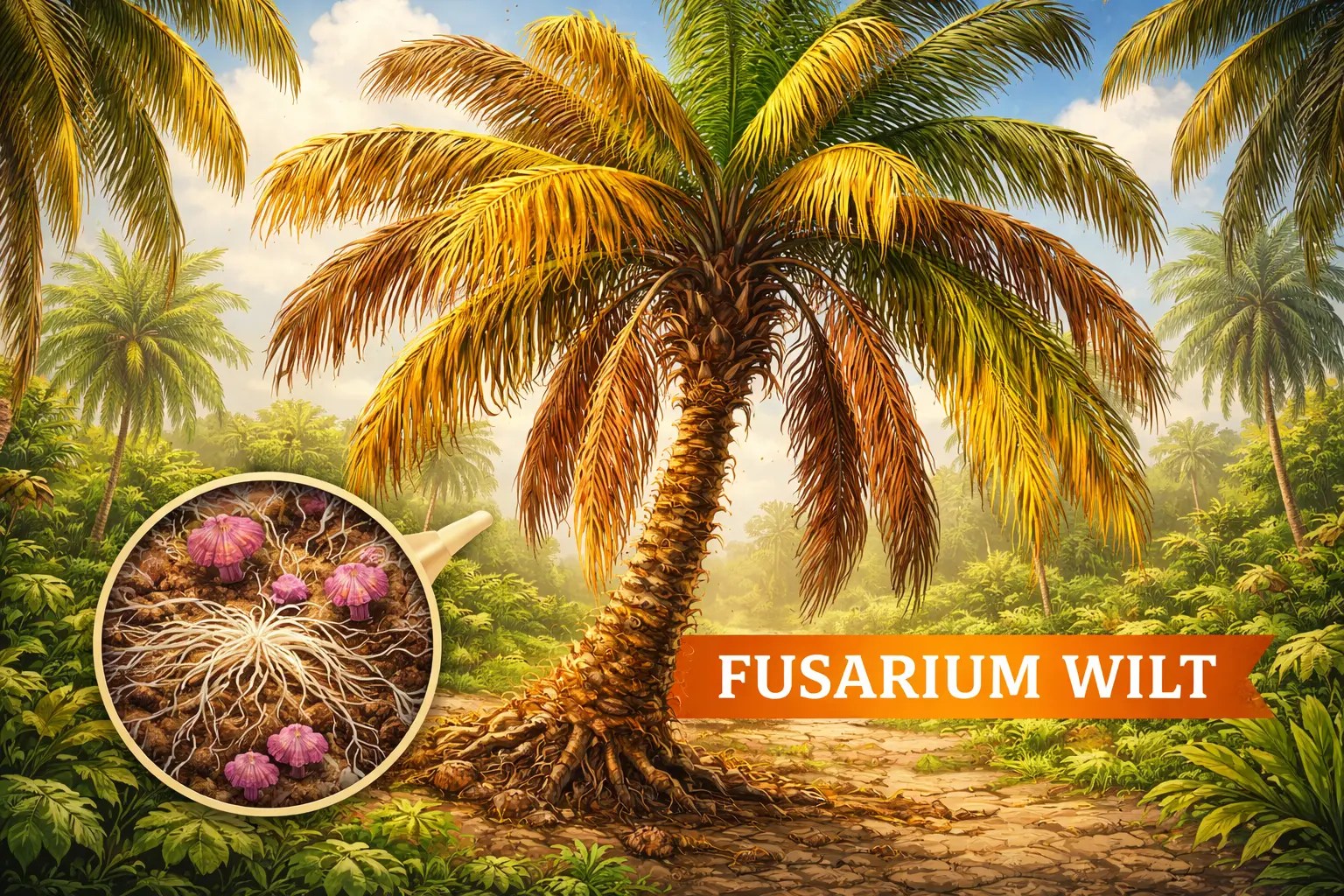
Fusarium Wilt: A Serious Disease of Palm Trees
Introduction
Fusarium wilt is a common and deadly disease that affects ornamental trees and shrubs, including palm trees. It is caused by a fungus called Fusarium oxysporum, which attacks the vascular system of the plant, cutting off its water supply.
Symptoms of Fusarium Wilt
The most noticeable symptom of Fusarium wilt in palm trees is yellowing and browning of the fronds, starting with the older fronds at the bottom of the tree. As the disease progresses, the fronds will wilt and die, giving the tree a scorched appearance. Other symptoms include:
- Drooping or wilting fronds
- Premature fruit drop
- Reduced growth
- Sap oozing from the trunk or roots
Causes of Fusarium Wilt
Fusarium wilt is caused by the fungus Fusarium oxysporum, which lives in the soil. The fungus can enter the plant through wounds in the roots or trunk, or through contaminated soil or water. Once inside the plant, the fungus spreads through the vascular system, blocking the flow of water and nutrients.
Treatment and Management of Fusarium Wilt
Unfortunately, there is no cure for Fusarium wilt in palm trees. Once a tree is infected, it will eventually die. However, there are some management practices that can help to slow the progression of the disease and extend the life of the tree:
- Provide supplemental water: Fusarium wilt thrives in dry conditions, so it is important to provide extra water to infected trees, especially during hot, dry weather.
- Remove infected debris: Infected fronds and other plant debris should be removed and disposed of immediately to prevent the spread of the fungus. Do not compost infected material, as the fungus can survive in compost.
- Prune off dying fronds: Dying fronds should be pruned off to prevent them from becoming a breeding ground for pests and diseases. However, it is important to disinfect tools before and after pruning to prevent the spread of the fungus.
- Maintain good hygiene: Fusarium wilt can be spread through contaminated tools, equipment, and clothing. It is important to disinfect all tools and equipment before using them on other trees, and to avoid working with infected trees when the ground is wet.
Prevention of Fusarium Wilt
The best way to prevent Fusarium wilt is to keep your palm trees healthy and free of wounds. Here are some tips:
- Choose resistant varieties: Some palm tree varieties are more resistant to Fusarium wilt than others. When planting new trees, choose varieties that are known to be resistant to the disease.
- Avoid planting in poorly drained soil: Fusarium wilt is more likely to occur in soils that are poorly drained. If you are planting in a poorly drained area, be sure to amend the soil with organic matter to improve drainage.
- Water deeply and regularly: Deep watering helps to keep the soil moist and prevent the spread of the fungus. Water your palm trees deeply and regularly, especially during dry weather.
- Avoid over-fertilizing: Over-fertilizing can weaken palm trees and make them more susceptible to disease. Fertilize your palm trees according to the manufacturer’s instructions, and avoid using fertilizers that are high in nitrogen.
Conclusion
Fusarium wilt is a serious disease that can kill palm trees. However, by following the management and prevention practices outlined in this article, you can help to protect your palm trees from this deadly disease.
