
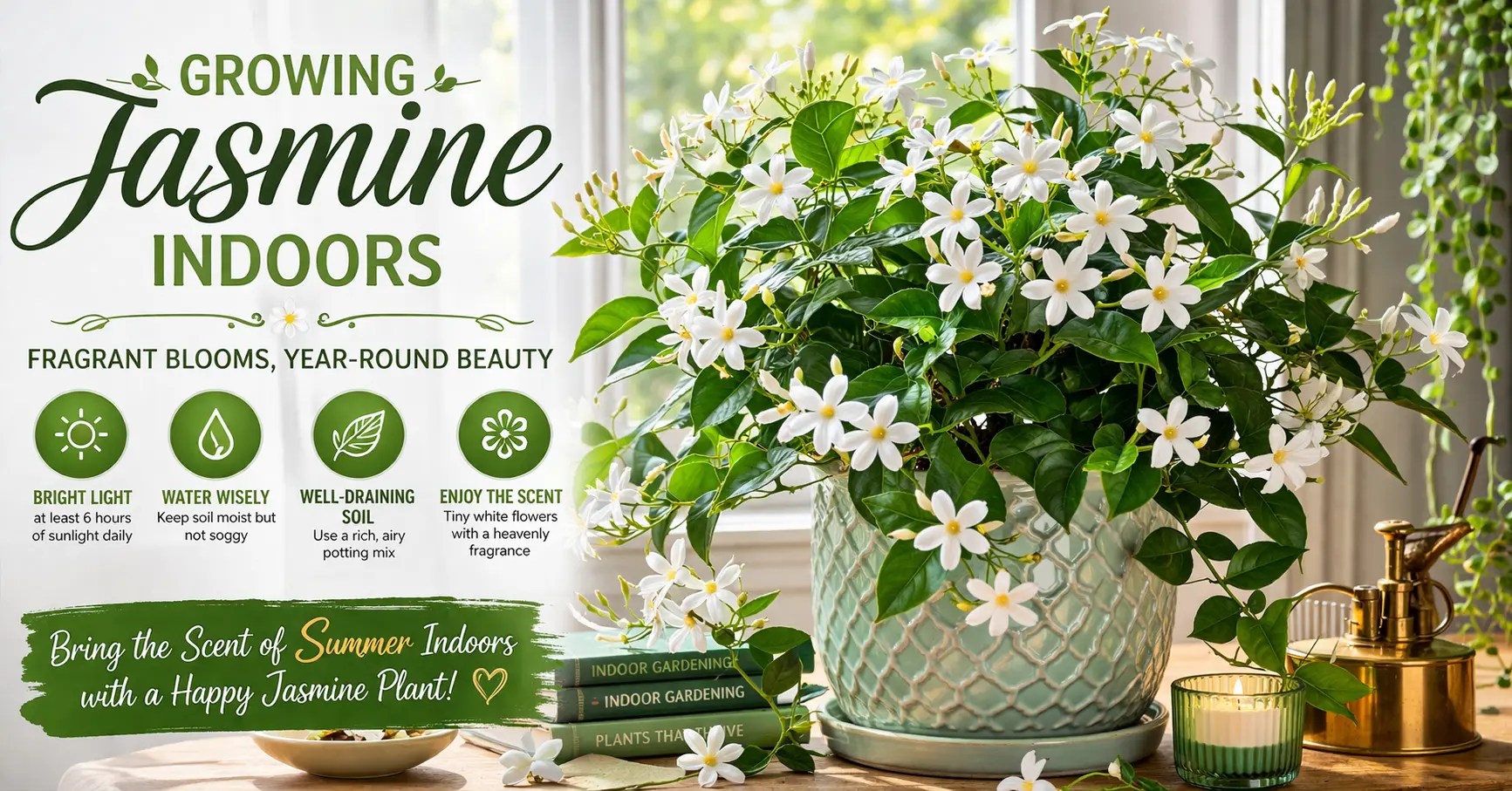
Growing Jasmine Indoors: A Comprehensive Guide for Beginners
Jasmine plants are known for their beautiful, fragrant flowers and lush greenery. While many jasmine varieties thrive outdoors, some, like Jasminum polyanthum, can be successfully grown indoors with proper care. Here’s a comprehensive guide to help you cultivate a healthy and vibrant indoor jasmine plant.
Choosing the Right Type of Jasmine
Not all jasmine varieties are suitable for indoor cultivation. Jasminum polyanthum, also known as winter jasmine, is a popular choice for indoor growers due to its compact size and sweet, nighttime fragrance.
Providing Optimal Conditions
Light: Indoor jasmine plants prefer bright, indirect light. Place them near a south-facing window where they can receive ample sunlight without getting scorched.
Temperature: Jasmine plants thrive in warm temperatures between 65-80°F (18-27°C). Avoid exposing them to cold drafts or extreme heat.
Humidity: Jasmine plants appreciate high humidity levels. Mist them regularly or place them on a tray filled with pebbles and water.
Soil: Use a well-draining potting mix specifically designed for houseplants. You can also add organic matter like bark or coir to improve soil aeration and moisture retention.
Watering and Fertilizing
Watering: Water your indoor jasmine plant thoroughly when the top inch of soil feels dry to the touch. Avoid overwatering, as this can lead to root rot.
Fertilizing: Fertilize your jasmine plant every two weeks during the growing season (spring and summer) with a balanced liquid fertilizer diluted to half strength.
Pruning and Training
Pruning is essential for maintaining a healthy and compact indoor jasmine plant.
Pruning: Prune your jasmine plant regularly to remove dead or diseased stems, encourage new growth, and control its size. Prune heavily in early spring to promote vigorous growth.
Training: Train your jasmine plant to climb a trellis or support structure to provide it with additional support and encourage vertical growth.
Troubleshooting Common Problems
Lack of Blooms: If your indoor jasmine plant is not blooming, it may not be receiving enough sunlight or cool temperatures. Ensure it gets at least six hours of indirect sunlight per day and expose it to cooler temperatures (around 50-55°F or 10-13°C) for a few weeks in autumn to promote bud formation.
Mealybugs: Mealybugs are common pests that can infest jasmine plants. Inspect your plant regularly for white, cottony masses under leaves and on stems. Remove mealybugs manually with a cotton swab dipped in alcohol.
Yellowing Leaves: Yellowing leaves can indicate overwatering, nutrient deficiency, or root rot. Adjust your watering schedule, fertilize your plant regularly, and check the roots for any signs of rot.
Repotting and Propagation
Repotting: Repot your indoor jasmine plant every 2-3 years or when it becomes rootbound. Use a slightly larger pot with fresh potting mix.
Propagation: You can propagate jasmine plants from cuttings taken in spring or summer. Root the cuttings in moist potting mix and provide them with bright, indirect light and warm temperatures.
Conclusion
Growing jasmine indoors can be a rewarding experience, filling your home with fragrance and beauty. By following these care tips, you can enjoy a healthy and thriving indoor jasmine plant for years to come.
