How to Save a Broken Plant Stem: A Step-by-Step Guide
Introduction
Have you ever been heartbroken to find a broken stem on your favorite plant? Don’t despair! With a little know-how and some TLC, you can often reattach a broken plant stem and save your precious greenery. In this article, we’ll walk you through the steps of splice grafting, a technique that can help you repair broken stems and restore your plant to health.
Understanding Plant Anatomy
Before we dive into the repair process, let’s take a quick look at the anatomy of a plant stem. The stem is responsible for transporting water and nutrients from the roots to the leaves, and it also provides support for the plant. The outer layer of the stem is called the epidermis, and it’s covered by a waxy cuticle that helps to protect the plant from water loss. The inner part of the stem contains vascular tissues, which are responsible for transporting water and nutrients.
When to Reattach a Broken Stem
Not all broken stems can be repaired. If the break is clean and the stem is still attached to the plant by a small amount of tissue, you have a good chance of success. However, if the break is jagged or the stem is completely severed, it’s unlikely that you’ll be able to reattach it.
Materials You’ll Need
To reattach a broken plant stem, you’ll need the following materials:
- A sharp knife or pruning shears
- A splint (a thin piece of wood, plastic, or metal)
- Plant tape or grafting wax
- A pot or container filled with potting mix
Step-by-Step Instructions
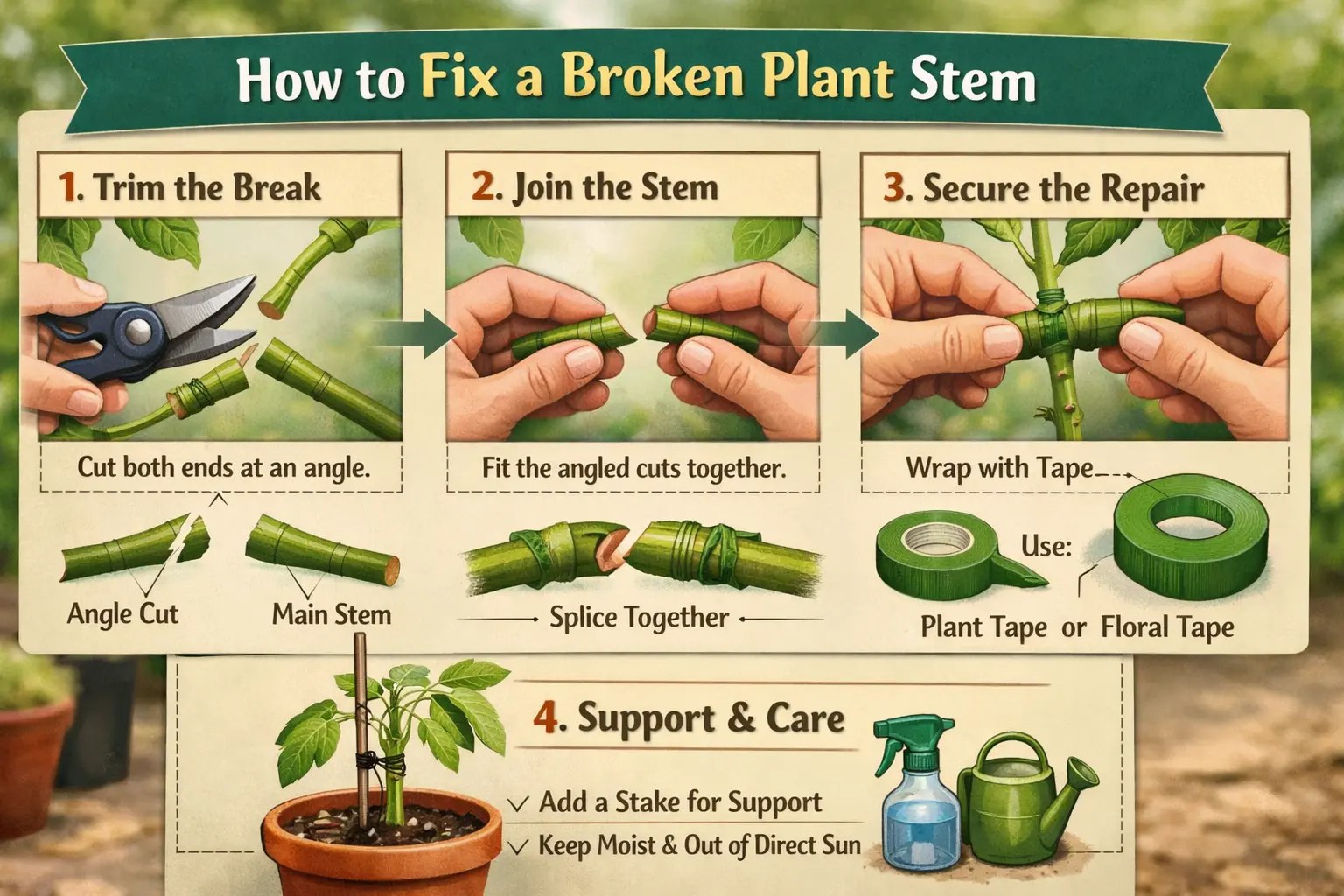
1. Prepare the Stems
- Use a sharp knife or pruning shears to make a clean cut on both sides of the break.
- Remove any damaged tissue from the edges of the cut.
2. Create a Splint
- Choose a splint that is long enough to support the broken stem.
- Cut the splint to the desired length and shape.
3. Attach the Splint
- Place the splint along the break in the stem.
- Wrap the plant tape or grafting wax around the splint and the stem to secure it in place.
- Make sure the binding is tight enough to hold the stem in place, but not so tight that it cuts off the circulation.
4. Pot the Plant
- Fill a pot or container with potting mix.
- Plant the broken stem in the pot, making sure that the splint is supported.
- Water the plant thoroughly.
5. Care for the Plant
- Keep the plant in a warm, humid environment.
- Mist the plant regularly to keep the leaves moist.
- Avoid overwatering the plant, as this can lead to root rot.
Tips for Success
- Use a sharp knife or pruning shears to make clean cuts.
- Remove all damaged tissue from the edges of the cut.
- Choose a splint that is the right size and shape for the break.
- Wrap the plant tape or grafting wax tightly enough to hold the stem in place, but not so tight that it cuts off the circulation.
- Keep the plant in a warm, humid environment.
- Mist the plant regularly to keep the leaves moist.
- Avoid overwatering the plant.
Troubleshooting
- If the stem doesn’t heal after a few weeks, it may be necessary to remove the splint and try again.
- If the stem starts to wilt or turn brown, it’s likely that the break is too severe to repair.
- If you’re having trouble reattaching a broken stem, you can consult with a local nursery or garden center for assistance.
Conclusion
Reattaching a broken plant stem can be a challenging but rewarding task. By following the steps outlined in this article, you can increase your chances of success and save your beloved plant from an untimely demise.
