
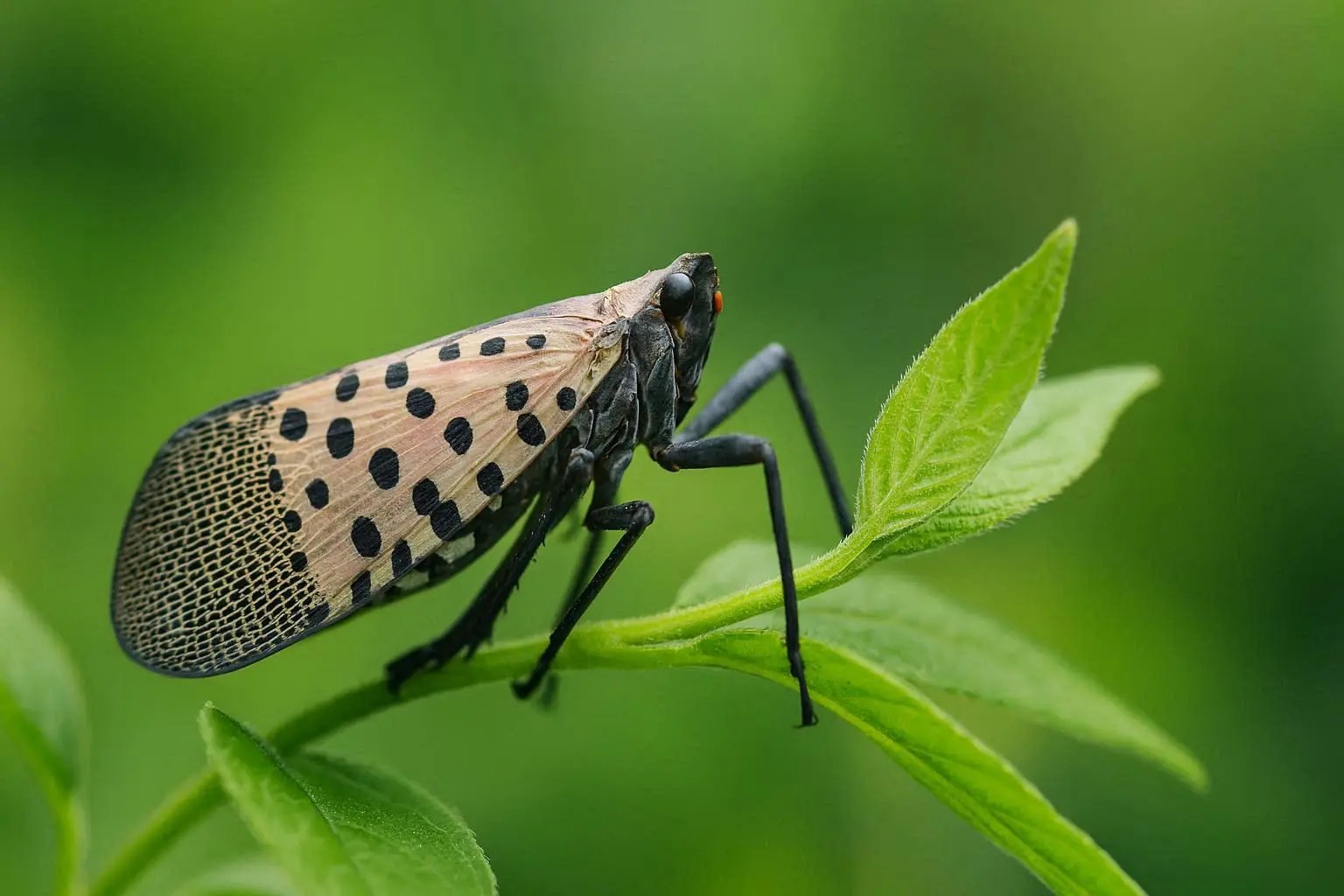
Spotted Lanternflies: A Threat to Plants and Gardens
What are Spotted Lanternflies?
Spotted Lanternflies are not moths or flies, but insects that belong to the same group as cicadas and hoppers. They are native to China, but have recently invaded the United States and are causing significant damage to plants.
Adult Spotted Lanternflies have black heads, gray/black forewings, and reddish black spotted rear wings. They are about an inch long and have a wingspan of about 2 inches. Nymphs (immature Spotted Lanternflies) are black with white spots when they hatch in the spring. As they mature, they become red and black with white polka dots.
Spotted Lanternfly Damage
Spotted Lanternflies feed on the sap of over 70 species of plants, including fruit trees, grapevines, and hardwood trees. They suck the fluids from the plant stems and leaves, which can cause wilting, branch dieback, and even death.
In addition to feeding on plant sap, Spotted Lanternflies also excrete a sticky substance called honeydew. Honeydew attracts sooty mold, a fungus that grows on the surface of plants and blocks sunlight. Sooty mold can reduce the plant’s ability to photosynthesize and can lead to poor plant growth.
How to Get Rid of Spotted Lanternflies
There are several methods for controlling Spotted Lanternflies, including:
- Insecticides: Insecticides can be effective in killing Spotted Lanternflies, but they should be used with caution, as they can also harm beneficial insects.
- Beneficial insects: Some beneficial insects, such as ladybugs and praying mantises, feed on Spotted Lanternflies. Encouraging these insects to live in your garden can help to control the Spotted Lanternfly population.
- Biological control: There are several fungi and bacteria that can infect and kill Spotted Lanternflies. Biological control is a promising method for controlling Spotted Lanternflies, but more research is needed.
- Mechanical control: Mechanical control methods include removing egg masses and using tree banding to trap nymphs.
How to Remove Spotted Lanternfly Egg Masses
Spotted Lanternflies lay their eggs in masses on smooth surfaces, such as tree trunks, rocks, and manmade objects. Egg masses look like muddy areas covered with a gray wax.
To remove egg masses, scrape them off with a putty knife or credit card and drop them into a solution of rubbing alcohol. This will kill the eggs and prevent them from hatching.
How to Use Tree Banding to Control Spotted Lanternflies
Tree banding is a method of trapping nymphs as they crawl up the trunk of a tree to feed. To use tree banding:
- Place a sticky trap around the trunk of the tree, at least 6 inches wide and at chest height.
- Secure the trap with push pins.
- Replace the trap every two weeks until the end of July.
Additional Tips for Controlling Spotted Lanternflies
- Inspect your plants regularly for signs of Spotted Lanternflies.
- Remove any weeds or other vegetation that could provide cover for Spotted Lanternflies.
- Keep your garden clean and free of debris.
- Report any sightings of Spotted Lanternflies to your local agricultural extension office.
By following these tips, you can help to control the Spotted Lanternfly population and protect your plants from damage.
