
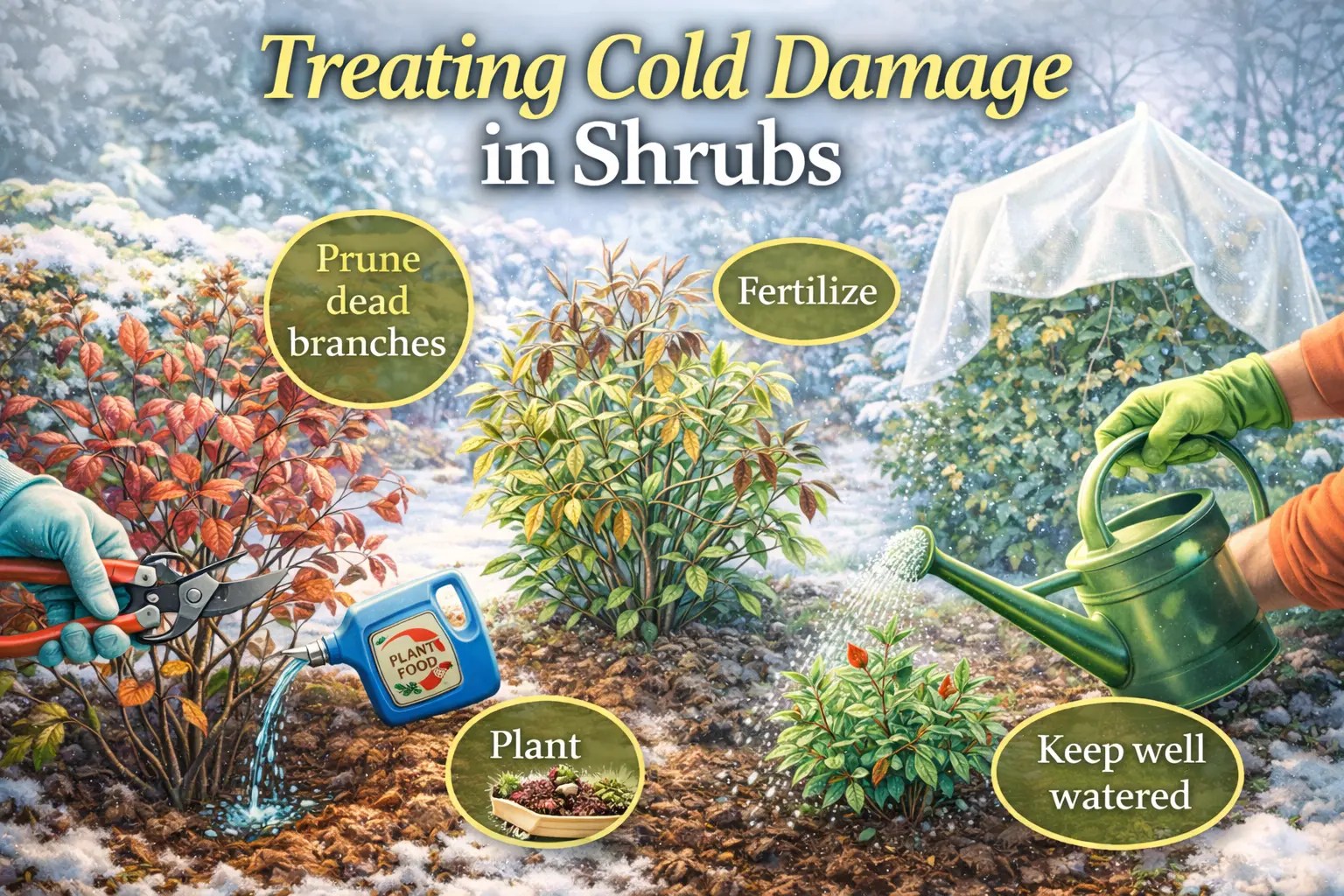
Winter Woes: Understanding and Treating Cold Damage in Shrubs
Introduction:
Winter can be a harsh time for plants, especially shrubs. The cold temperatures, icy winds, and fluctuating weather conditions can all take a toll on our beloved greenery. In this article, we’ll explore the different types of cold damage that can affect shrubs, how to identify and assess the damage, and effective strategies for treating and preventing winter injuries.
Types of Cold Injury in Shrubs
Cold damage can manifest in various forms, each with its unique characteristics:
- Physical Damage: This includes broken stems or branches, which can occur due to the weight of ice or snow.
- Tissue Damage: Low temperatures can damage new growth and flower buds, causing them to turn brown and fall off.
- Sunscald: Bright winter sunlight can heat the south-facing side of shrubs, damaging the cambium and causing reddish-brown cracks in the bark.
- Desiccation: Icy winds can suck the moisture out of leaves and stems, causing them to dry out and wither.
- Animal Damage: Animals may chew on or girdle shrubs in search of food, causing extensive damage.
Identifying and Assessing Cold Damage
Recognizing the signs of cold damage is crucial for timely treatment. Here’s what to look for:
- Broken or bent limbs
- Brown or wilted leaves
- Cracked or discolored bark
- Shriveled stems
- Dead or dying buds
Assessing the severity of the damage is also important. If the damage is limited to a few branches or leaves, the shrub may recover with proper care. However, if the main stem or trunk is affected, the shrub may be irreparably damaged.
Treating Cold Damage in Shrubs
With proper care, many shrubs can recover from cold damage. Here are some steps you can take:
1. Assessment and Pruning:
- Remove any broken or severely damaged branches.
- Prune back dead or diseased twigs and branches in spring, when the plant is actively growing.
2. Sunscald Treatment:
- Paint the trunk with diluted white latex paint to reflect sunlight and prevent further damage.
3. Wind Desiccation Prevention:
- Erect burlap screens around the trunk to block icy winds.
- Water plants regularly during cold, dry periods.
4. Animal Deterrence:
- Use metal collars around the main stem to prevent girdling.
- Apply animal deterrents to keep animals away from shrubs.
5. Mulch for Cold Protection:
- Spread a layer of mulch around the base of shrubs to insulate the roots and protect them from cold snaps.
6. Patience and Care:
- Avoid over-pruning or fertilizing damaged shrubs.
- Give the plant time to recover with proper care and attention.
Preventing Cold Damage to Shrubs
Prevention is always better than cure. Here are some tips to minimize the risk of cold damage to your shrubs:
- Choose Hardy Plants: Select shrubs that are well-suited to your local climate and hardiness zone.
- Proper Planting: Plant shrubs in well-drained soil and provide adequate spacing for air circulation.
- Watering and Mulching: Water shrubs deeply before winter and spread a layer of mulch around the base.
- Winter Protection: Wrap young or vulnerable shrubs in burlap or other protective materials during extreme cold.
By understanding the different types of cold damage, how to identify and assess it, and effective treatment methods, you can help your shrubs survive the harsh winter months and thrive in the seasons to come.
