
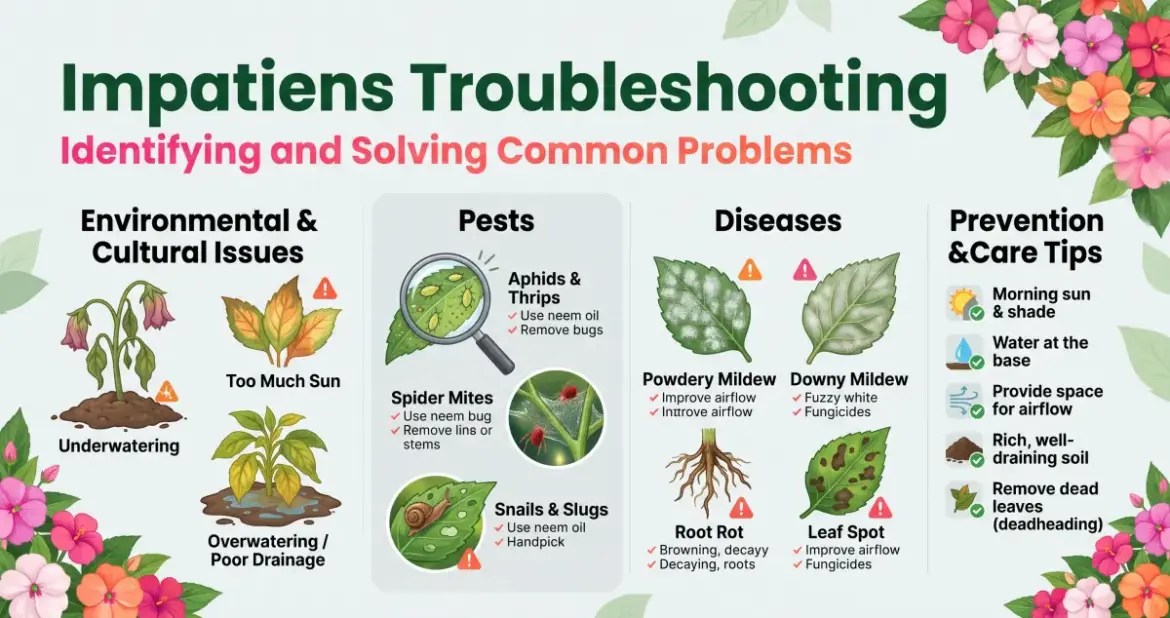
Impatiens: Troubleshooting Common Problems
Introduction
Impatiens are generally low-maintenance plants, but they can occasionally develop problems. By understanding the most common issues and taking preventative measures, you can keep your impatiens healthy and blooming beautifully.
Environmental and Cultural Issues
- Wilting: Impatiens need consistent moisture, but not soggy soil. Water stress can cause wilting, especially in hot weather or when the plants are in too much sun. Water regularly and move the plants to a shadier location if possible.
- Leaf and Flower Drop: In addition to water stress, wilting and leaf/flower drop can also be caused by heat stress or nutrient deficiencies. Fertilize impatiens lightly in the spring, but avoid over-fertilizing, as too much nitrogen can lead to excessive growth and fewer blooms.
- Mottled Foliage: Not enough fertilizer can cause impatiens leaves to develop a mottled appearance. Add a balanced fertilizer to the soil to correct this issue.
- Excessive Growth and Lack of Blooms: Too much nitrogen fertilizer can cause impatiens to grow excessively with few blooms. Adding phosphorus to the soil can help balance the nutrients and encourage flowering.
Pests
- Spider Mites, Mealybugs, Aphids, and Thrips: These common pests can cause curled, discolored, or distorted leaves. Thrips can also carry viruses that affect impatiens.
- Tarnished Plant Bug: This pest can lead to dwarfed and deformed flowers.
- Cutworms: Cutworms cut stems, causing plants to wilt and die.
- Nematodes: Nematodes attack impatiens roots, causing the plants to appear sickly, stunted, and wilted.
Treatment for Pests:
Neem oil is a safe and effective treatment for most impatiens pests. For nematodes, remove affected plants and the surrounding soil. Solarize plant beds and apply diluted fish emulsion when replanting to prevent future infestations.
Diseases
- Fungal Blights and Rots: These issues are often caused by wet foliage or overcrowding. Avoid wetting the leaves when watering and space plants adequately to promote air circulation. Neem oil can also help treat fungal problems.
- Impatiens Necrotic Spot Virus (INSV): This serious disease is transmitted by thrips. Control thrips to prevent INSV.
- Bacterial Wilt: This disease causes sudden wilting and collapse of plants, as well as oozing from cut stems. Remove and discard infected plants immediately.
Tips for Prevention
- Provide consistent moisture without overwatering.
- Fertilize lightly in the spring.
- Avoid overcrowding and ensure adequate spacing between plants.
- Control pests promptly using neem oil or other appropriate treatments.
- Remove and discard diseased plants immediately.
Conclusion
By following these tips, you can prevent and treat common impatiens problems, ensuring that your plants thrive and bloom beautifully all season long.