
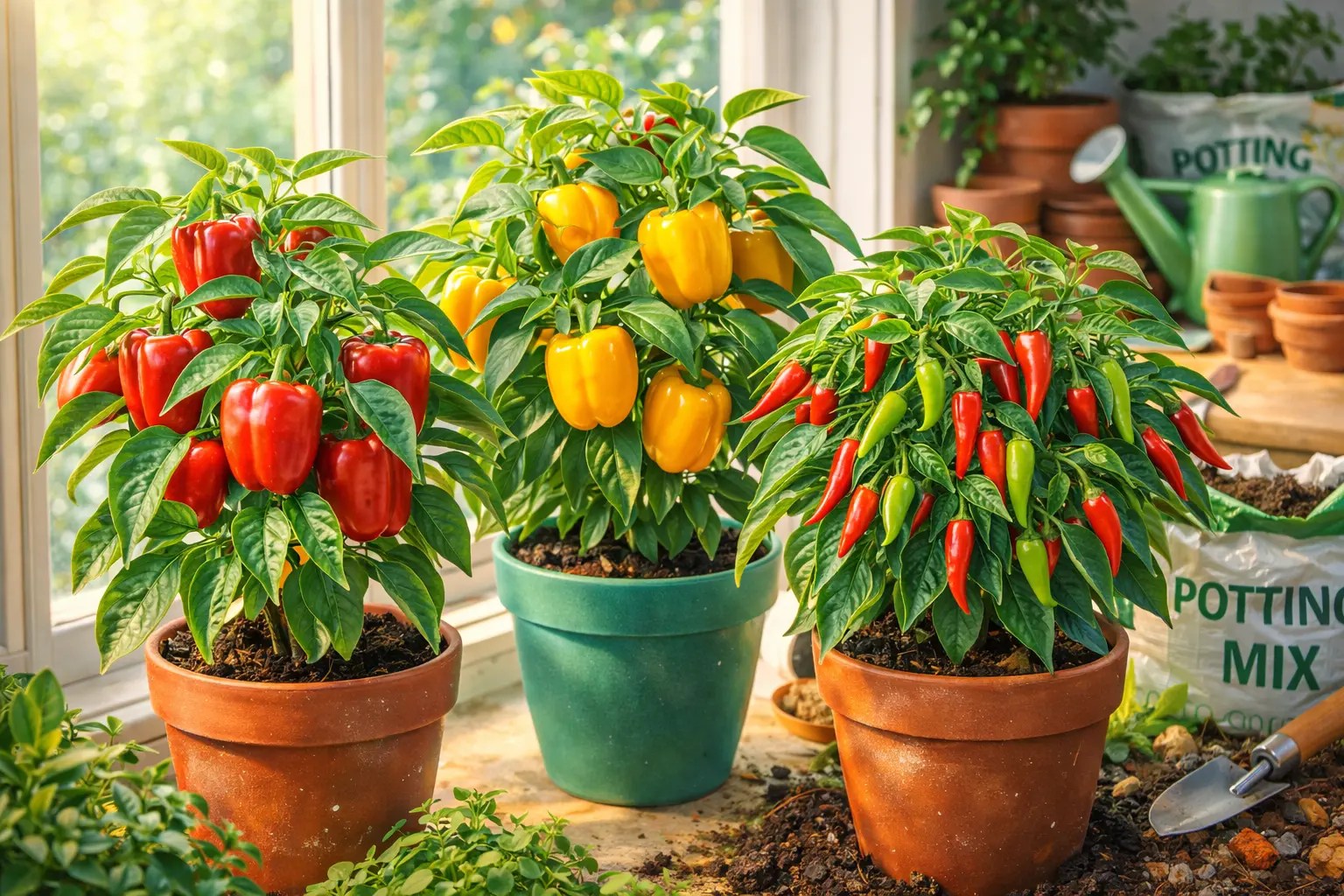
Growing Peppers Indoors: A Comprehensive Guide
If you’re a pepper enthusiast who enjoys the taste of both hot and sweet peppers, you may be wondering if it’s possible to grow pepper plants indoors. The answer is yes! Growing peppers indoors is a great way to enjoy fresh peppers all year round, regardless of the season. Even if you don’t have a garden, you can still grow peppers indoors in pots or containers.
Choosing the Right Pepper Plants for Indoor Growing
Not all pepper plants are well-suited for indoor growing. The best pepper plants to grow indoors are smaller varieties, such as pequins, chiltepins, habaneros, and Thai peppers. These peppers are more compact and don’t require as much space to grow. You can also grow ornamental peppers indoors, which are grown for their attractive foliage and fruits.
Providing the Right Conditions for Indoor Pepper Plants
Indoor pepper plants need the same basic requirements as those grown outdoors: sunlight, water, and fertilizer.
- Sunlight: Pepper plants need plenty of sunlight to grow and produce fruit. If you don’t have a sunny window, you can use grow lights to supplement the natural light.
- Water: Water your pepper plants when the top of the soil feels slightly dry to the touch. Avoid overwatering, as this can lead to root rot.
- Fertilizer: Feed your pepper plants with a balanced fertilizer every few weeks. This will help them to grow and produce more fruit.
Starting Pepper Plants from Seed Indoors
You can start pepper plants from seed indoors 6-8 weeks before the last frost date in your area. To start pepper seeds indoors, follow these steps:
- Fill a seed tray with a seed-starting mix.
- Sow the pepper seeds on the surface of the mix and gently press them into the soil.
- Cover the seeds with a thin layer of soil.
- Water the seeds and place the tray in a warm, sunny location.
- Keep the soil moist and the temperature around 70-80 degrees Fahrenheit.
- The seeds should germinate within 14-28 days.
Transplanting Pepper Plants Indoors
Once the pepper seedlings have developed their first set of true leaves, you can transplant them into individual pots or containers. To transplant pepper seedlings, follow these steps:
- Fill a pot or container with potting mix.
- Dig a hole in the potting mix that is deep enough to accommodate the roots of the seedling.
- Carefully remove the seedling from the seed tray and place it in the hole.
- Fill in the hole with potting mix and gently press down around the base of the plant.
- Water the seedling and place it in a warm, sunny location.
Caring for Indoor Pepper Plants
Once your pepper plants are transplanted, they will need regular care to thrive. Here are a few tips for caring for indoor pepper plants:
- Temperature: Pepper plants prefer warm temperatures between 70-80 degrees Fahrenheit during the day and 60-70 degrees Fahrenheit at night.
- Humidity: Pepper plants prefer moderate humidity. You can increase the humidity around your plants by placing them on a tray filled with pebbles and water.
- Pruning: You can prune your pepper plants to encourage bushier growth and more fruit production. To prune your pepper plants, simply remove any dead or diseased leaves and stems. You can also pinch back the tips of the branches to encourage new growth.
Harvesting Peppers
Pepper plants will typically start to produce fruit 2-3 months after they are transplanted. To harvest peppers, simply cut the peppers from the plant with a sharp knife. Peppers can be eaten fresh, cooked, or dried.
Troubleshooting Common Problems with Indoor Pepper Plants
Here are a few common problems that you may encounter when growing pepper plants indoors:
- Pests: Aphids, thrips, and whiteflies are common pests that can infest pepper plants. To control pests, you can use insecticidal soap or neem oil.
- Diseases: Pepper plants can be susceptible to a variety of diseases, such as powdery mildew, leaf spot, and blight. To prevent diseases, keep your plants clean and well-watered. You can also use fungicides to control diseases.
- Nutrient deficiencies: Pepper plants may develop nutrient deficiencies if they are not fertilized regularly. To correct nutrient deficiencies, fertilize your plants with a balanced fertilizer.
Growing peppers indoors is a fun and rewarding experience. By following these tips, you can enjoy fresh peppers all year round.
