
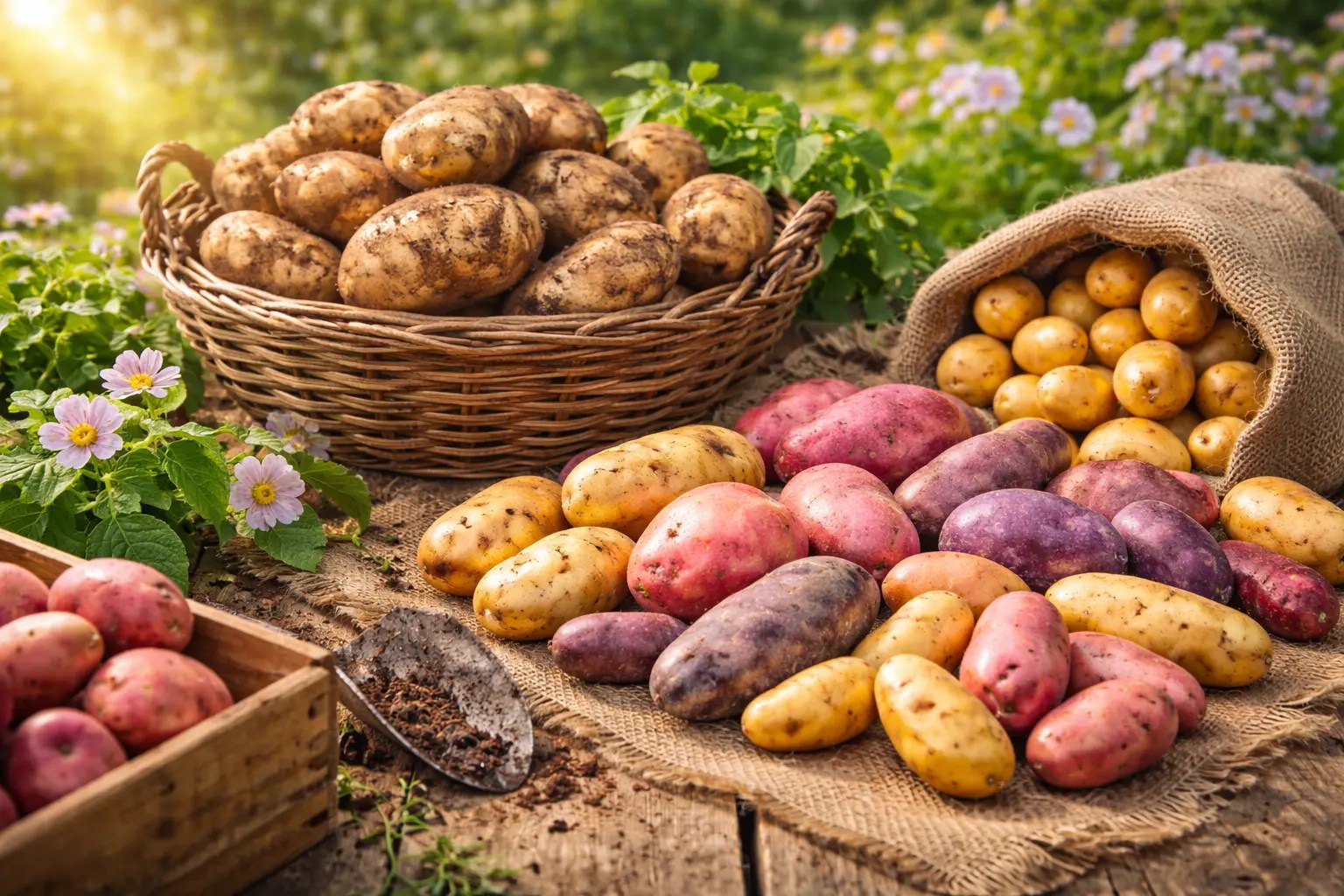
Potatoes: From Seed to Table
What is a Potato?
Potatoes are a type of vegetable that grows underground. They are part of the nightshade family, which also includes tomatoes, peppers, and eggplants. Potatoes are a good source of carbohydrates, fiber, and vitamins.
Seed Potatoes vs. True Potato Seeds
When most people talk about potato seeds, they are actually referring to seed potatoes. Seed potatoes are small, whole potatoes that are planted in the ground to grow new potato plants. True potato seeds, on the other hand, are the tiny seeds that are found inside potato berries.
Why Are Seed Potatoes Used Instead of True Potato Seeds?
Seed potatoes are used instead of true potato seeds for several reasons. First, seed potatoes are much larger than true potato seeds, which makes them easier to plant and handle. Second, seed potatoes are genetically identical to the mother plant, which means that they will produce potatoes that are the same variety as the mother plant. True potato seeds, on the other hand, are not genetically identical to the mother plant, which means that they can produce potatoes that are different in size, shape, and flavor.
How to Grow Potatoes from True Potato Seeds
It is possible to grow potatoes from true potato seeds, but it is more difficult than growing potatoes from seed potatoes. To grow potatoes from true potato seeds, you will need to:
- Separate the seeds from the rest of the fruit.
- Soak the seeds in water for several days.
- Plant the seeds in a well-drained seedbed.
- Keep the seedbed moist and warm.
- Transplant the seedlings to the garden once they have developed several true leaves.
Potato Varieties
There are many different varieties of potatoes, each with its own unique flavor, texture, and appearance. Some of the most popular potato varieties include:
- Russet potatoes: These are the most common type of potato used for baking and frying.
- Yukon Gold potatoes: These potatoes have a yellow flesh and a slightly sweet flavor. They are good for roasting, mashing, and boiling.
- Red potatoes: These potatoes have a red skin and a white flesh. They are good for boiling, roasting, and salads.
- Fingerling potatoes: These potatoes are long and narrow, with a thin skin and a creamy texture. They are good for roasting and sautéing.
Potato Gardening
Potatoes are relatively easy to grow in the home garden. They prefer well-drained soil that is rich in organic matter. Potatoes should be planted in the spring, after the last frost date. The seed potatoes should be planted about 6 inches deep and 12 inches apart.
Potatoes need regular watering, especially during hot, dry weather. They should also be fertilized every few weeks with a balanced fertilizer.
Potato Harvesting
Potatoes are ready to harvest when the tops of the plants start to turn yellow and die back. To harvest potatoes, carefully dig them up with a shovel. Be careful not to damage the potatoes.
Potato Storage
Potatoes can be stored in a cool, dark place for several months. They should be stored in a well-ventilated container to prevent them from rotting.
Potato Pests and Diseases
Potatoes are susceptible to a number of pests and diseases, including:
- Potato beetles
- Aphids
- Blight
- Scab
These pests and diseases can be controlled with a variety of methods, including pesticides, insecticides, and fungicides.
Potato Nutrition
Potatoes are a good source of several nutrients, including:
- Carbohydrates
- Fiber
- Vitamin C
- Potassium
- Iron
Potatoes are also a low-fat, low-calorie food. This makes them a good choice for people who are trying to lose weight or maintain a healthy weight.
