
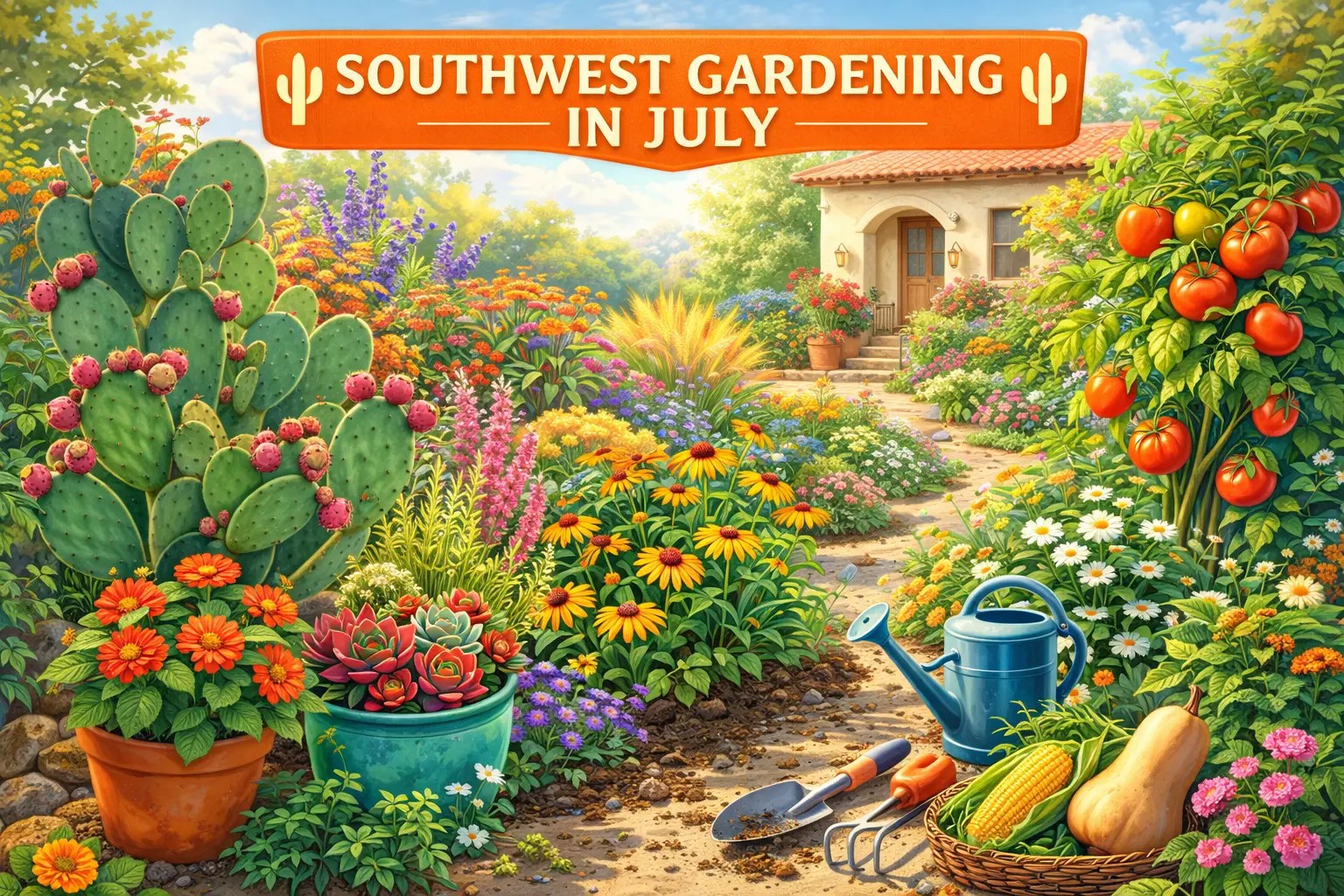
Gardening in the Southwest in July
Introduction
Summer is in full swing in the southwest, and it’s important to take special care of your garden during this hot and dry month. With the right care, you can keep your plants healthy and hydrated, and even start planning for your fall garden.
Watering
Watering is the most important task for southwest gardeners in July. The intense heat can quickly dry out the soil, so it’s crucial to water your plants deeply and regularly.
- Install a watering system: An in-ground irrigation system or a DIY drip irrigation system can save you time and ensure that your plants get the water they need.
- Water at the right time: Water your plants in the early morning or evening when the sun’s heat is less intense. This will give the water time to soak into the soil before it evaporates.
- Water deeply: Water your plants until the soil is moist to a depth of at least 6 inches. This will encourage deep root growth and help your plants withstand the heat.
Mulching
Mulch is a layer of material, such as straw, hay, or bark, that is spread around plants to help retain moisture, suppress weeds, and regulate soil temperature.
- Spread mulch around your plants: A 2- to 3-inch layer of mulch will help keep the soil moist and cool.
- Choose the right mulch: Organic mulches, such as straw or compost, will break down over time and add nutrients to the soil. Inorganic mulches, such as gravel or plastic, will last longer but won’t add nutrients to the soil.
Planting
While July may seem like a hot time to plant, there are actually many vegetables that can be planted in the southwest during this month.
- Start fall crops: Broccoli, cauliflower, and other fall vegetables can be started in July.
- Plant heat-loving plants: Tomatoes, peppers, and other heat-loving plants can be planted in July for a second harvest.
- Direct seed: Beans, melons, squash, and corn can still be direct seeded in July.
Pest and Disease Control
Pests and diseases can be a problem for southwest gardeners in July. The heat and humidity can create favorable conditions for these pests and diseases to thrive.
- Keep an eye out for pests and diseases: Regularly inspect your plants for signs of pests or diseases.
- Treat problems early: If you do find pests or diseases, treat them immediately to prevent them from spreading.
- Use organic controls: If possible, use organic methods to control pests and diseases. This will help protect your plants and the environment.
Garden To-Do List for July
In addition to watering, mulching, planting, and pest and disease control, there are a few other tasks that you can do in your southwest garden in July.
- Deadhead annuals and perennials: Deadheading, or removing spent flowers, will encourage new blooms and keep your plants looking their best.
- Harvest crops regularly: Harvest zucchini, tomatoes, and other crops frequently to encourage continued production.
- Fertilize roses and perennials: Fertilize roses and perennials for the last time of the season.
- Remove water sprouts from fruit trees: Water sprouts are suckers that grow from the trunk or branches of fruit trees. Remove them to improve air circulation and fruit production.
- Divide spent perennials: Perennials that have finished blooming can be divided and replanted to create new plants.
- Plant native plants: Native plants are adapted to the southwest climate and require less water and care than non-native plants.
- Remove old crowns from strawberry plants: Old strawberry crowns can become unproductive. Remove them to encourage new growth.
- Start fall crops: Start seeds for fall crops, such as broccoli, cauliflower, and cabbage.
- Water and weed: Continue to water and weed your garden regularly.
Conclusion
By following these tips, you can keep your southwest garden looking its best and producing a bountiful harvest all summer long.
