
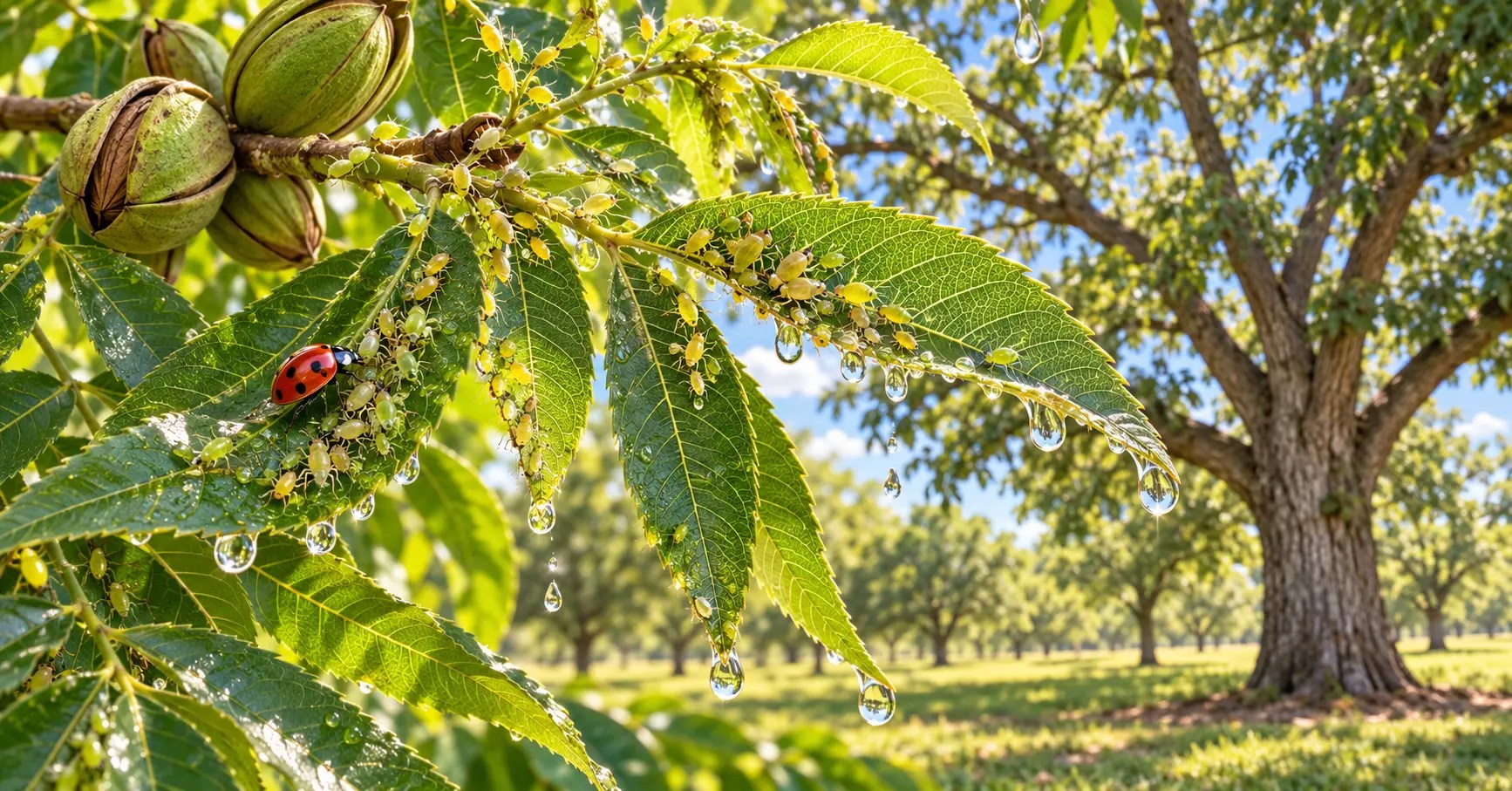
Why Do Pecan Trees Drip Sap?
Pecan trees are a common sight in Texas, and for good reason. They’re the state tree, and they’re also very resilient trees that can survive in a variety of conditions. However, like all trees, they’re susceptible to certain problems. One common problem is pecan tree sap.
What Causes Pecan Tree Sap?
If you see sap dripping from your pecan tree, it’s probably not actually sap. It’s likely honeydew, which is a sweet, sticky substance that aphids excrete. Aphids are tiny insects that suck sap from plants.
There are two main types of aphids that affect pecan trees: the black margined aphid and the yellow pecan aphid. The black margined aphid is more common and causes more damage to pecan trees. Aphids can cause leaves to turn yellow and drop off, and they can also weaken the tree’s overall health.
How to Control Aphids on Pecan Trees
There are a number of ways to control aphids on pecan trees. One way is to use natural enemies, such as ladybugs and lacewings, which feed on aphids. You can also use insecticidal soap or neem oil to kill aphids.
If you have a large infestation of aphids, you may need to use a stronger insecticide. However, it’s important to note that insecticides can also kill beneficial insects, so it’s best to use them only as a last resort.
How to Prevent Pecan Tree Sap
The best way to prevent pecan tree sap is to control aphids. You can do this by:
- Inspecting your trees regularly for aphids
- Using natural enemies to control aphids
- Using insecticidal soap or neem oil to kill aphids
- Avoiding the use of chemical insecticides, which can kill beneficial insects
Additional Tips
- Some varieties of pecan trees are more resistant to aphids than others. If you’re planting a pecan tree, choose a variety that is known for its resistance to aphids.
- Keep your pecan trees healthy by watering them regularly and fertilizing them according to the manufacturer’s instructions. Healthy trees are less likely to be affected by aphids.
- If you see any signs of aphid damage on your pecan tree, take action immediately to control the aphids and prevent further damage.
Conclusion
Pecan tree sap is a common problem, but it can be easily controlled with the right approach. By following the tips in this article, you can keep your pecan trees healthy and free of aphids.
