
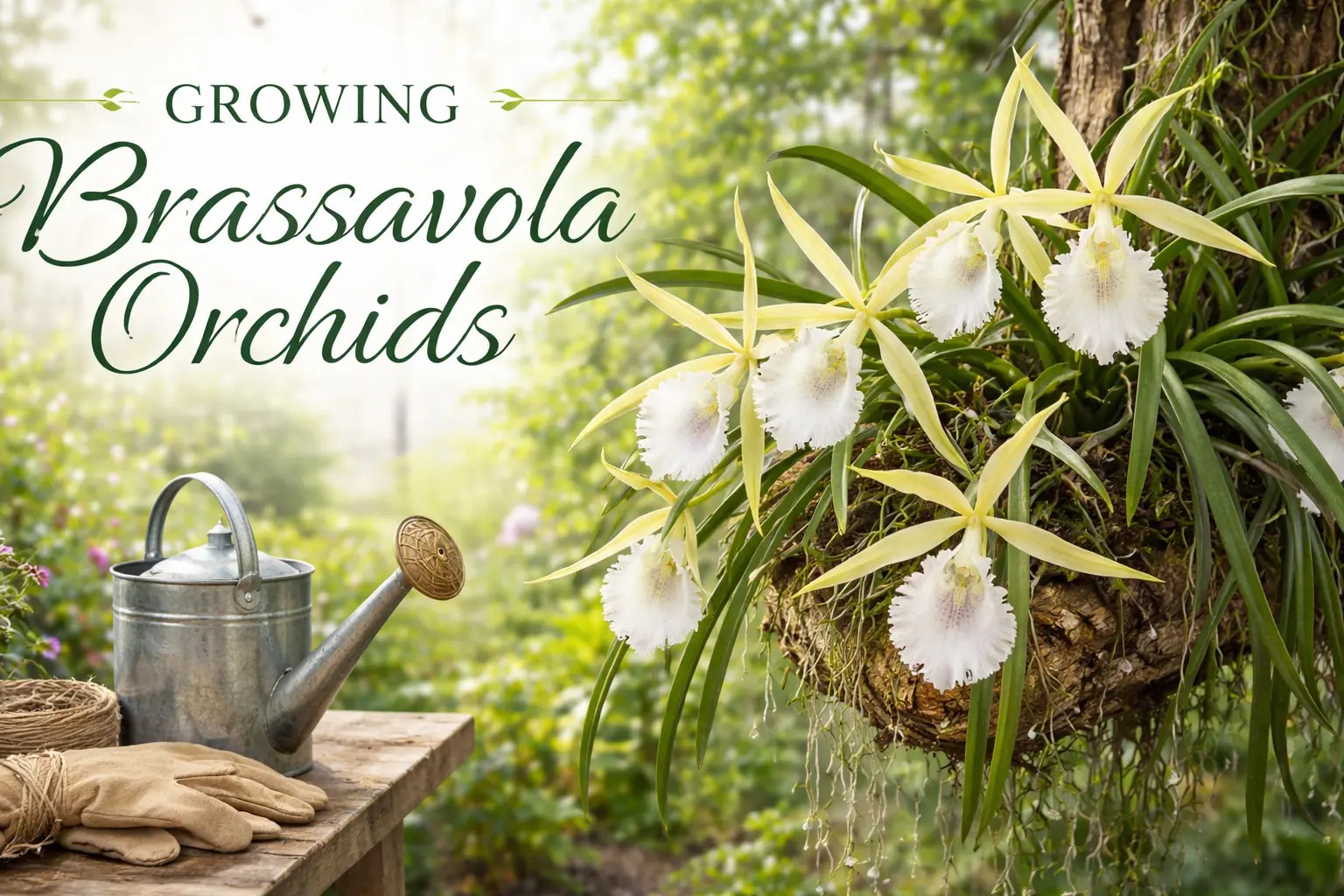
Growing Brassavola Orchids: A Beginner’s Guide to Success
Introduction
Orchids are beautiful and rewarding plants to grow indoors, but they can also seem intimidating, especially for beginners. However, with the right knowledge and care, even novice growers can enjoy the beauty and fragrance of Brassavola orchids.
What is a Brassavola Orchid?
Brassavola orchids are a genus of epiphytic orchids, meaning they grow on trees or other plants in their natural habitat. They are known for their understated white flowers, which are pollinated by moths at night. The flowers are highly fragrant, with a citrus-like scent that can last up to 30 days. Brassavola orchids are relatively small, reaching only about 10 inches in height at maturity.
Choosing the Right Species
There are many different species of Brassavola orchids, each with its own unique characteristics. Some popular choices for indoor growing include:
- Brassavola nodosa: This species is known for its large, showy flowers and strong fragrance. It is a good choice for beginners, as it is relatively easy to grow.
- Brassavola cucullata: This species has smaller flowers than B. nodosa, but they are still very fragrant. It is a good choice for growing in hanging baskets or mounted on trees.
- Brassavola glauca: This species has bluish-green leaves and white flowers with a hint of lavender. It is a good choice for growing in low-light conditions.
Growing Conditions
Brassavola orchids need bright, indirect light to thrive. They can tolerate low-light conditions, but they may not flower as frequently. The ideal temperature range for Brassavola orchids is between 60 and 80 degrees Fahrenheit.
Water your Brassavola orchid when the potting mix is almost dry to the touch. Avoid overwatering, as this can lead to root rot. Fertilize your orchid every two to four weeks with a balanced fertilizer.
Potting and Mounting
Brassavola orchids can be grown in pots or mounted on trees or other objects. If you are growing your orchid in a pot, use a well-draining potting mix specifically designed for orchids. If you are mounting your orchid, use a piece of cork or wood and attach the orchid to it with wire or fishing line.
Common Problems
Brassavola orchids are relatively low-maintenance plants, but they can sometimes be affected by pests or diseases. Common problems include:
- Mealybugs: These small, white insects can suck the sap from your orchid’s leaves. Treat them with a horticultural oil or insecticidal soap.
- Scale: These small, brown insects attach themselves to your orchid’s leaves and stems. Treat them with a horticultural oil or rubbing alcohol.
- Root rot: This fungal disease is caused by overwatering. If you suspect your orchid has root rot, repot it in fresh potting mix and water it less frequently.
Tips for Success
Here are a few tips to help you grow healthy and beautiful Brassavola orchids:
- Choose the right species: There are many different species of Brassavola orchids, so do some research to find one that is best suited to your growing conditions and preferences.
- Provide bright, indirect light: Brassavola orchids need bright light to thrive, but they can tolerate low-light conditions.
- Water wisely: Water your Brassavola orchid when the potting mix is almost dry to the touch. Avoid overwatering, as this can lead to root rot.
- Fertilize regularly: Fertilize your orchid every two to four weeks with a balanced fertilizer.
- Be patient: Orchids can take several years to mature and bloom. Don’t be discouraged if your orchid doesn’t flower right away. With proper care, it will eventually produce beautiful blooms.
