Bleeding Heart: A Beloved Garden Plant
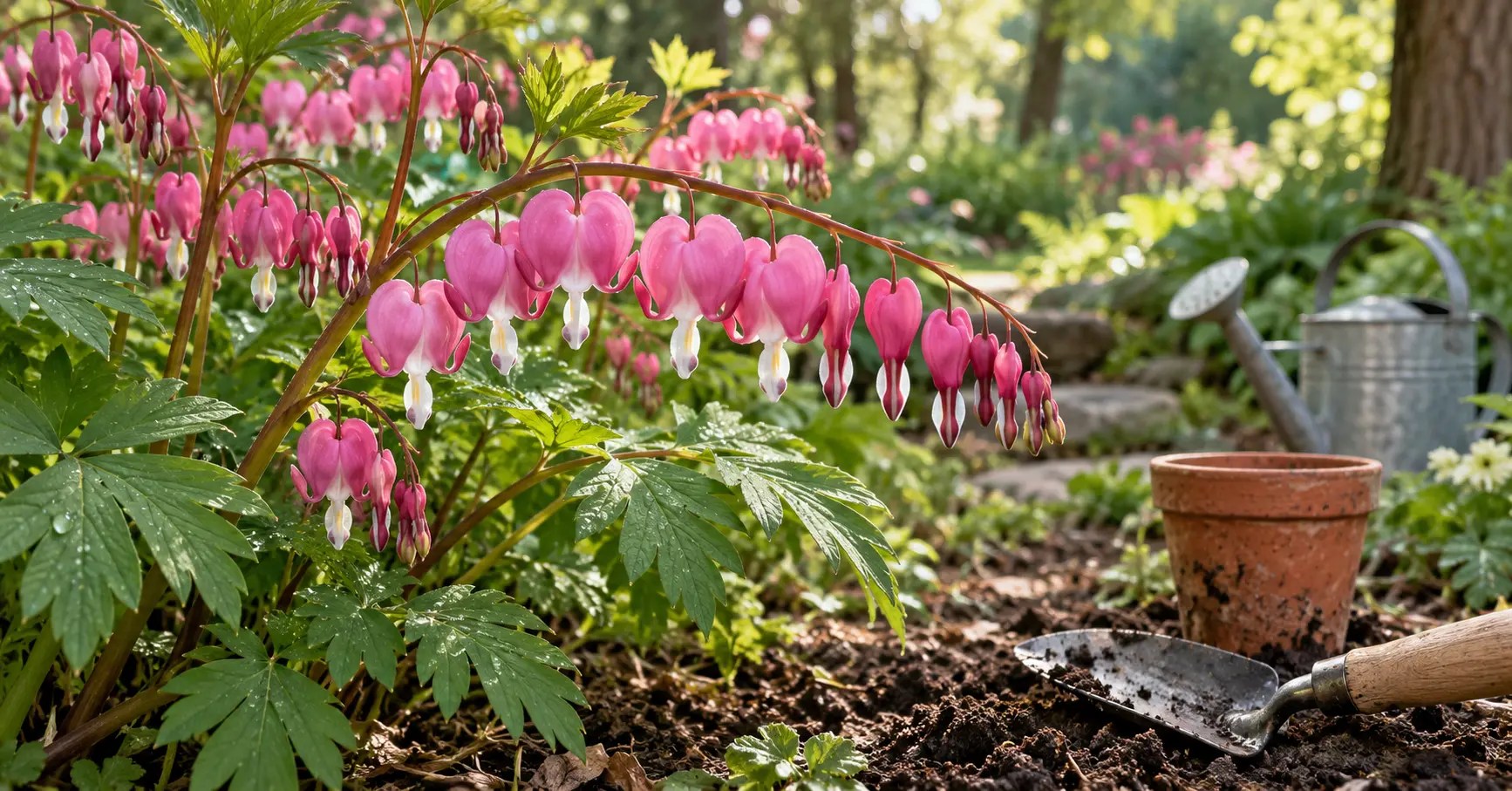
Bleeding heart is a popular plant for shady gardens in North America and Europe. It’s also known as lady-in-the-bath or lyreflower. Bleeding heart is a perennial plant, meaning it comes back year after year. It’s easy to grow and can be divided and transplanted to share with friends.
Planting Bleeding Heart Tubers
Bleeding heart plants are usually sold as growing container plants, bare root plants, or in packages as tubers.
- Growing container plants are already leafed out and may be flowering. You can plant them in the garden whenever you purchase them.
- Bare root bleeding heart and bleeding heart tubers are the dormant roots of the plant. They both need to be planted at specific times to eventually leaf out and bloom.
Bleeding Heart Tubers vs. Bare Root Bleeding Heart
Both bleeding heart tubers and bare root bleeding heart have their pros and cons.
- Bleeding heart bare root plants should only be planted in spring and require special planting.
- Bleeding heart tubers can be planted in fall or spring. They are easier to plant than bare root bleeding heart, but they generally take longer to establish and flower.
How to Plant Bleeding Heart Tubers
- Choose a planting site with partial shade and well-draining soil.
- Dig a hole 1 to 2 inches deep and 24 to 36 inches apart.
- Place the tuber in the hole with the eyes facing upward.
- Cover the tuber with soil and water well.
- Mark the planting site so you don’t accidentally dig up the tubers.
Caring for Bleeding Heart Plants
Bleeding heart plants are relatively easy to care for. They prefer partial shade and well-draining soil. They should be watered regularly, especially during hot, dry weather.
- Fertilize bleeding heart plants monthly with a balanced fertilizer.
- Divide bleeding heart plants every 3-4 years to prevent them from becoming overcrowded.
- Mulch around bleeding heart plants to help retain moisture and suppress weeds.
Troubleshooting Bleeding Heart Problems
Bleeding heart plants are generally pest- and disease-resistant, but they can occasionally be affected by:
- Aphids: These small, green insects can suck the sap from bleeding heart leaves. Treat aphids with insecticidal soap or neem oil.
- Slugs and snails: These pests can eat bleeding heart leaves. Control slugs and snails with bait or traps.
- Root rot: This fungal disease can cause bleeding heart roots to rot. Avoid overwatering bleeding heart plants and improve drainage if necessary.
Conclusion
Bleeding heart is a beautiful and easy-to-grow plant that adds a touch of elegance to any garden. With proper care, bleeding heart plants will thrive for many years to come.
