
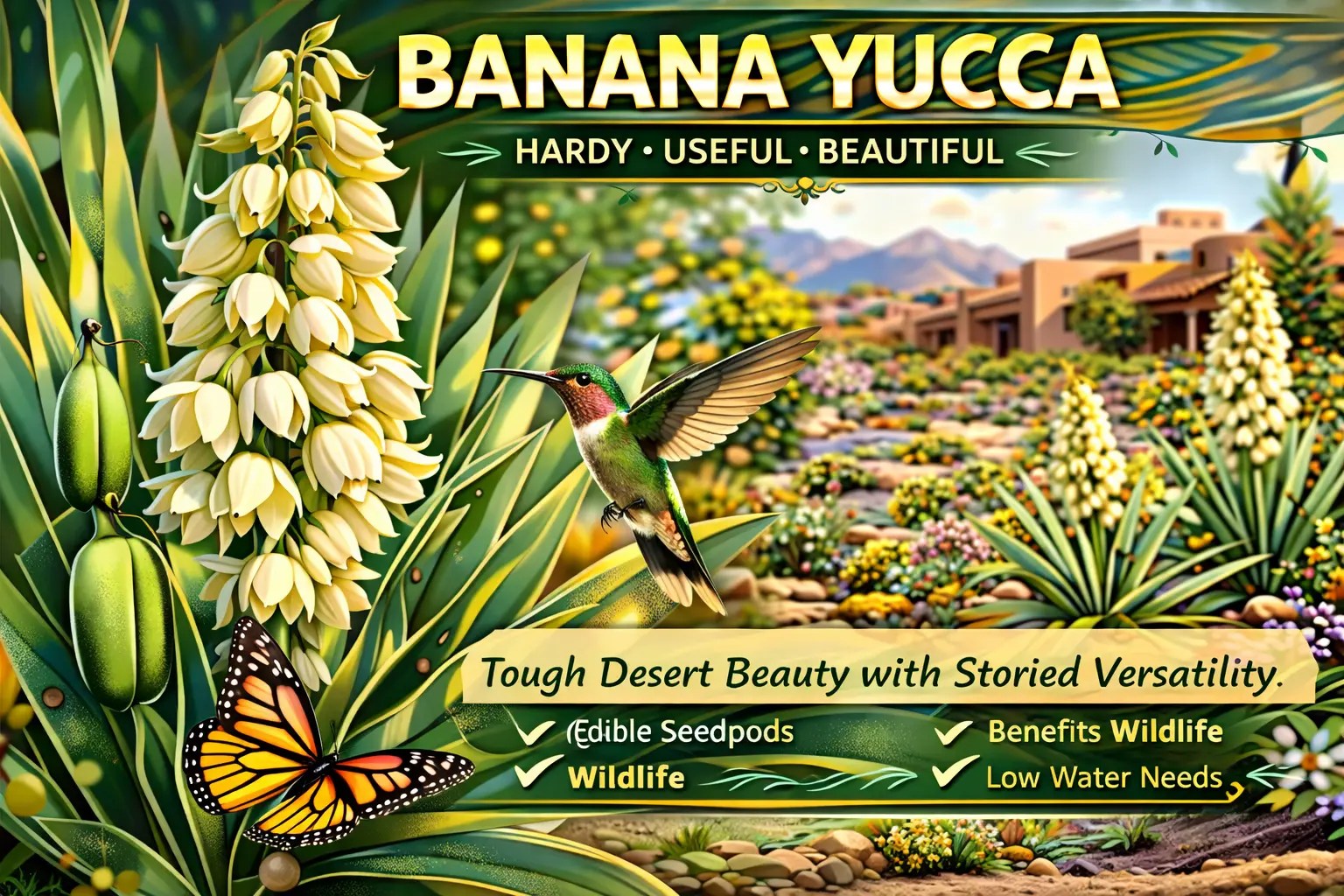
Banana Yucca: A Beginner’s Guide
Introduction
Banana yucca, also known as soapweed or blue yucca, is a type of yucca native to the southwestern United States and northern Mexico. It’s named for its fleshy, sweet-tasting, green to dark purple seedpods, which resemble bananas in size and shape.
Characteristics of Banana Yucca
Like all yuccas, banana yucca has stiff, sword-shaped leaves arranged in mounded clumps. In spring, it produces tall, attractive spikes of creamy flowers, though not every year. Banana yucca is a hardy plant that can tolerate cold temperatures down to -20 degrees F. However, its sharp leaf blades can be dangerous, so it’s not recommended for gardens with young children.
Growing Banana Yucca
Growing banana yucca is relatively easy. You can purchase a small plant from a nursery or garden center, divide an offset from an established plant, or take cuttings. If you’re adventurous, you can also plant yucca seeds indoors, but be aware that germination can be slow and unpredictable.
Banana yucca prefers full sun or partial shade and dry, well-drained soil. It’s a desert plant that tolerates drought but appreciates regular irrigation, especially during warm weather. Avoid overwatering, as soggy conditions can harm the plant.
Caring for Banana Yucca
Banana yucca is a low-maintenance plant, but there are a few things you can do to keep it healthy and thriving:
- Watering: Water your banana yucca about once a week during warm weather. Cut back on watering if the leaf tips turn brown.
- Fertilizing: Fertilize your banana yucca every spring using a balanced, slow-released fertilizer.
- Pruning: Remove old flower stalks before new growth emerges in early spring. Wear gloves and a long-sleeved shirt to protect yourself from the spiky stalks and sharp leaf blades.
- Pest control: Spider mites can be a problem for banana yucca, especially in dry, dusty environments. Treat infestations with insecticidal soap spray.
Benefits of Banana Yucca
In addition to its ornamental value, banana yucca has several other benefits:
- Edible seedpods: The seedpods of banana yucca are edible and have a sweet, fruity taste. They can be eaten fresh, dried, or cooked.
- Medicinal properties: Banana yucca has been used in traditional medicine to treat a variety of ailments, including skin infections, wounds, and digestive problems.
- Wildlife habitat: Banana yucca provides food and shelter for a variety of wildlife, including birds, butterflies, and bees.
Long-Tail Keyword-Focused Content
How to Grow Banana Yucca in a Container
Growing banana yucca in a container is a great option for those with limited space or who want to enjoy the plant indoors. Choose a container with drainage holes and fill it with a well-draining potting mix. Water the plant regularly and fertilize it every few months.
Growing Banana Yucca in Cold Climates
Banana yucca is a hardy plant, but it can struggle in cold climates. To protect it from the cold, mulch around the base of the plant and consider wrapping it in burlap or plastic during the winter months.
How to Propagate Banana Yucca from Cuttings
Propagating banana yucca from cuttings is a simple and effective way to create new plants. Take a cutting from a healthy stem and remove the bottom leaves. Dip the cut end in rooting hormone and plant it in a pot filled with moist potting mix. Keep the cutting warm and moist, and it should root within a few weeks.
The Benefits of Banana Yucca
Banana yucca is a versatile plant with a variety of benefits. Its edible seedpods, medicinal properties, and wildlife habitat value make it a valuable addition to any garden or landscape.
