
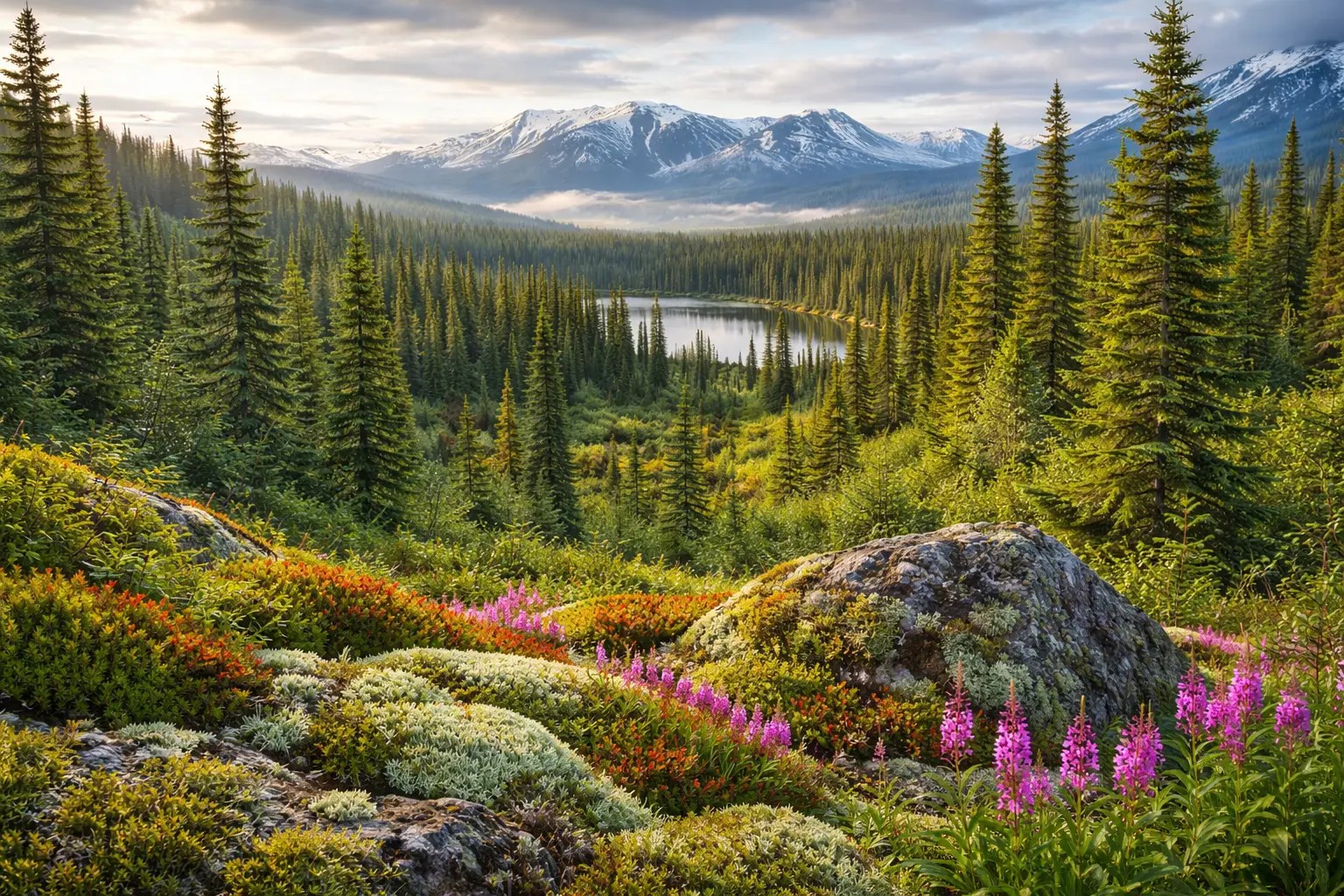
The Taiga: A Vast and Inhospitable Forest
Introduction
The taiga, also known as the boreal forest, is the largest terrestrial biome on Earth. It stretches across the northern regions of North America, Europe, and Asia, just south of the Arctic tundra. Winters in the taiga are long, cold, and harsh, with temperatures dropping well below freezing. Summers are short and wet, with long days and brief nights.
Plant Life in the Taiga
The harsh conditions of the taiga make it difficult for plants to survive. However, some plants have adapted to the cold, dark winters and short growing seasons. These plants are typically cold tolerant and evergreen, meaning they retain their leaves throughout the year.
Conifers: The Dominant Trees of the Taiga
The most common trees in the taiga are conifers, such as pines, spruces, and firs. Conifers are well-suited to the taiga climate because their needle-like leaves are covered in a waxy coating that helps to prevent water loss. Their pointed shape also allows snow to slide off easily, preventing branches from breaking.
Other Taiga Plants
In addition to conifers, the taiga is home to a variety of other plant species, including deciduous trees, shrubs, and wildflowers. Deciduous trees, such as birch and aspen, lose their leaves in the fall to conserve energy. Shrubs, such as willow and alder, are typically found in wet areas. Wildflowers, such as fireweed and lupine, add color to the taiga landscape during the short summer months.
Adaptations of Taiga Plants
Taiga plants have developed a number of adaptations to help them survive the harsh climate. These adaptations include:
- Cold tolerance: Taiga plants are able to withstand extremely cold temperatures, even below freezing.
- Evergreen leaves: Conifers retain their leaves throughout the year, which allows them to photosynthesize even during the short winter days.
- Waxy leaves: The waxy coating on the leaves of conifers helps to prevent water loss.
- Pointed leaves: The pointed leaves of conifers allow snow to slide off easily, preventing branches from breaking.
- Dark color: The dark color of conifer needles helps to absorb maximum solar energy for photosynthesis.
Threats to the Taiga
The taiga is facing a number of threats, including:
- Climate change: Climate change is causing the taiga to become warmer and drier, which is making it more difficult for cold-adapted plants to survive.
- Deforestation: Logging and other land-use changes are destroying taiga habitat.
- Pollution: Air pollution and acid rain are damaging taiga plants and soil.
Conclusion
The taiga is a vast and unique biome that is home to a variety of plant and animal life. However, the taiga is facing a number of threats, including climate change, deforestation, and pollution. It is important to protect the taiga and its inhabitants for future generations.
