
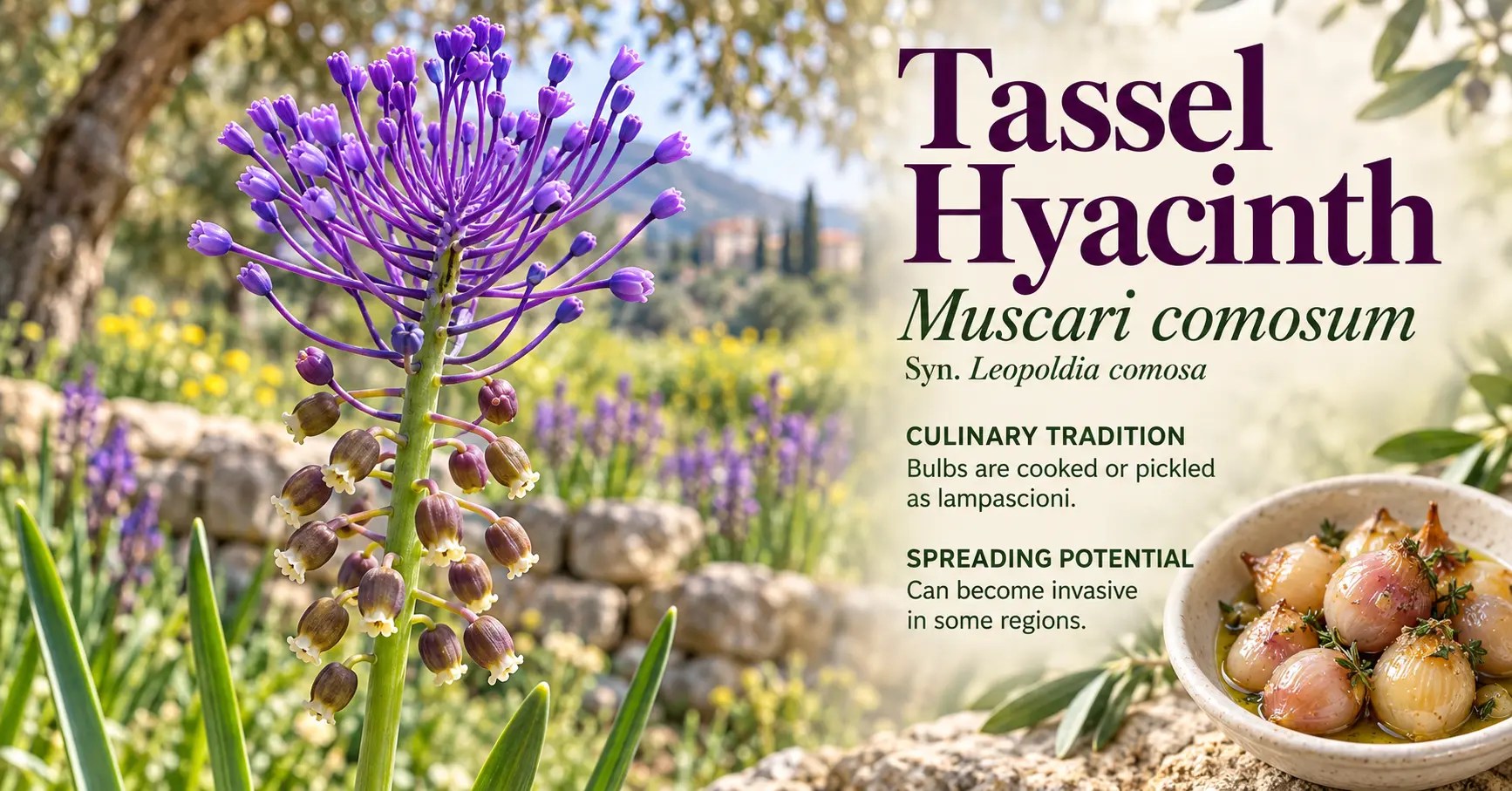
Tassel Hyacinth: A Wildflower with a Delicate Flavor
Introduction
Tassel hyacinth, also known as lampascioni, is a wildflower that is native to Turkey, Iraq, and southeastern Europe. It is a member of the lily family and is closely related to the common grape hyacinth. Tassel hyacinths are known for their delicate flavor and are often used in Mediterranean cuisine.
Description
Tassel hyacinths have grass-like leaves and produce clusters of bell-shaped flowers in the spring. The flowers are typically blue or purple and have a fringe of white or yellow hairs at the tips. The bulbs of tassel hyacinths are round and brown, and they are planted in the fall.
Growing Tassel Hyacinths
Tassel hyacinths are easy to grow and can be planted in a variety of soil types. However, they prefer well-drained soil that is rich in organic matter. Tassel hyacinths should be planted in the fall, about 3 inches deep and 2 to 4 inches apart. They should be watered deeply after planting and then regularly throughout the growing season.
Care of Tassel Hyacinths
Tassel hyacinths are relatively low-maintenance plants. They require regular watering, especially during the growing season. However, they should not be overwatered, as this can lead to bulb rot. Tassel hyacinths also benefit from being fertilized once a year in the spring.
Propagation
Tassel hyacinths can be propagated by dividing the bulbs in the fall. To do this, simply dig up the bulbs and separate them into individual cloves. The cloves can then be planted in new locations.
Culinary Uses
Tassel hyacinth bulbs are edible and have a delicate flavor that is similar to onions. They can be eaten raw, cooked, or pickled. Tassel hyacinth bulbs are often used in Mediterranean cuisine, and they can be added to salads, soups, stews, and other dishes.
Invasive Potential
Tassel hyacinth is a non-native plant in the United States. It has naturalized in many areas of the country and is considered an invasive plant in some states. Tassel hyacinth can spread rapidly and can form dense colonies that can crowd out native plants.
Conclusion
Tassel hyacinth is a beautiful and easy-to-grow wildflower that can be enjoyed in the garden or in the kitchen. Its delicate flavor makes it a popular ingredient in Mediterranean cuisine. However, it is important to be aware of the plant’s invasive potential before planting it in your garden.
Additional Information
- Scientific name: Leopoldia comosa
- Common names: Tassel hyacinth, tassel grape hyacinth, fringe hyacinth, musk hyacinth
- Family: Liliaceae
- Bloom time: Spring
- Flower color: Blue, purple, white, yellow
- Hardiness zones: 4-8
- Soil type: Well-drained, rich in organic matter
- Sun exposure: Full sun to part shade
- Propagation: Division of bulbs
- Culinary uses: Raw, cooked, or pickled
- Invasive potential: Yes, in some areas of the United States
